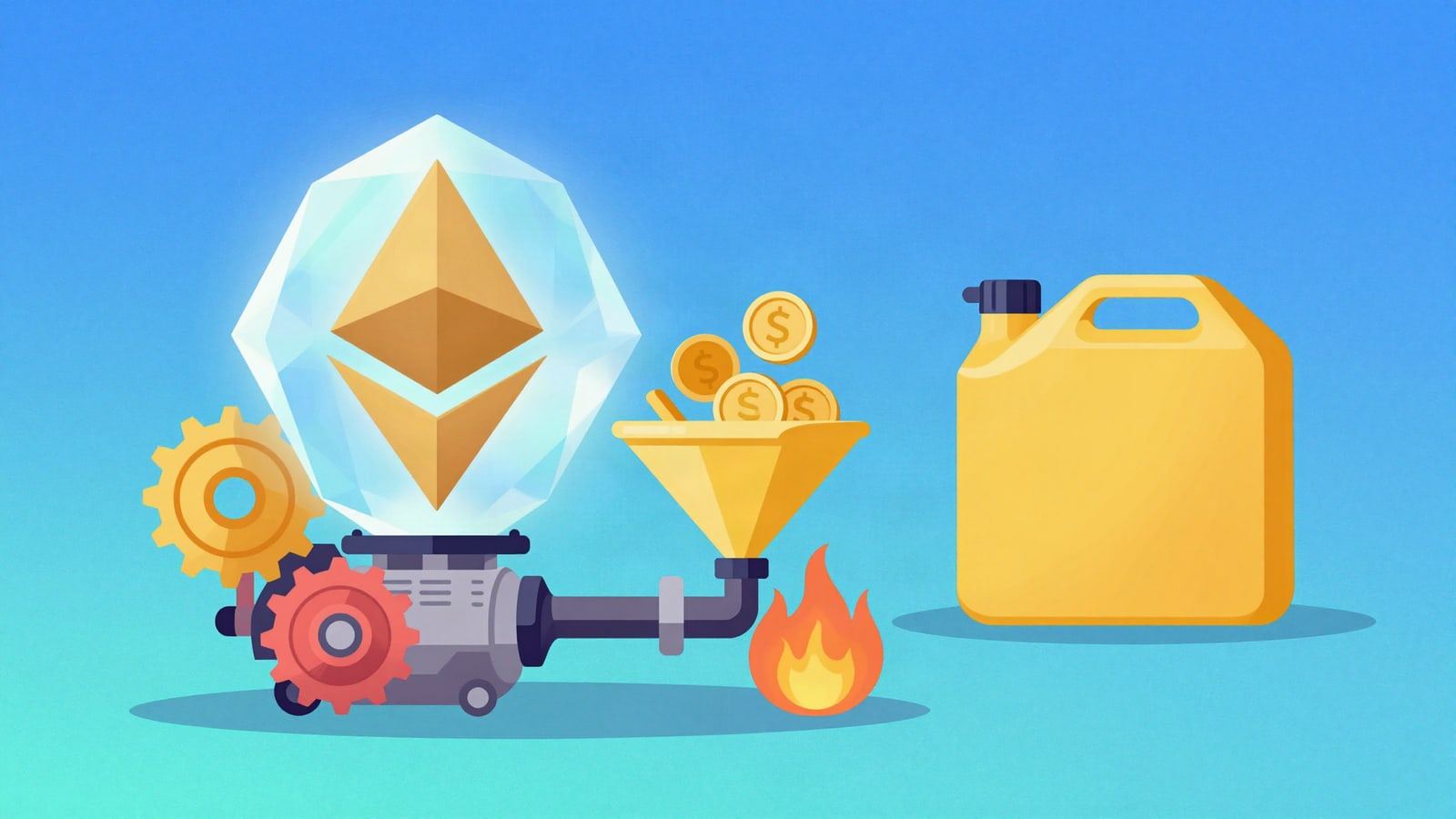
Ethereum gas fees explained: what you pay, why it changes, and how to pay less
How Ethereum gas fees work: gas units, gwei, the burned base fee, tips, max fee and gas limit, why failed transactions still cost you, and how to pay less.
Guides for readers in the United States: the rules that apply there, plus the guides that cover all three countries.
102 guides
In the United States, crypto rules come from several places: the IRS for tax, the SEC and the CFTC for securities and derivatives, FinCEN for anti-money laundering, and state regulators that license some platforms, such as New York's BitLicense and California's DFAL.
In each section below, the guides specific to the US come first, followed by the ones that cover all three countries.
How Ethereum gas fees work: gas units, gwei, the burned base fee, tips, max fee and gas limit, why failed transactions still cost you, and how to pay less.
How bitcoin divides into 100 million satoshis, what mBTC, bits and sats mean, how fees are quoted in sat/vB, Lightning's millisatoshis and simple conversions.
What the Ethereum Virtual Machine is, how it turns transactions into a new state, how contracts become opcodes, why gas exists and what EVM-compatible means.
What bitcoin and Ethereum nodes do, full, archive and light nodes, what running your own takes, how it differs from mining or staking, and the trade-offs.
What bitcoin miners do, how proof of work and the difficulty adjustment keep blocks at about 10 minutes, solo vs pool mining, and how mining is taxed.
Why a bitcoin transaction can sit unconfirmed for hours or days, how fees and the mempool work, and how replace-by-fee and child-pays-for-parent can speed it up.
Bitcoin and Ethereum compared: what each is for, mining vs staking, supply, fees, speed, what you can build, how they're regulated and taxed, and the risks.
Why quantum computers could one day break crypto wallet signatures, what's less at risk, NIST's post-quantum standards and what bitcoin and Ethereum are doing.
What blockchain bridges do, lock-and-mint and other designs, trusted vs trustless bridges, why bridges are behind some of the biggest hacks and how to stay safe.
A checklist for sending bitcoin, ether or stablecoins safely: copying addresses, the right network, fees, test transactions, confirmations and address poisoning.
Yes, owning crypto is legal in the US, UK and Canada, but it isn't legal tender. Who regulates platforms, what's banned, and what legal doesn't mean.
How crypto wallets use a private key, a public key and an address, which one you can share, how signatures prove ownership and why a lost key is final.
How a blockchain works, block by block: hashes, signatures, consensus, permissionless vs permissioned networks, and the limits that marketing usually leaves out.
What a central bank digital currency (CBDC) is, how it differs from cash, bank money, stablecoins and bitcoin, and the official position in the US, UK and Canada.
What layer 2 networks are, how optimistic and zero-knowledge rollups work, why fees are lower, the week-long withdrawal wait and the risks to check first.
Bitcoin explained from its original white paper and source code: mining, the 21 million cap, keys and wallets, and how US, UK and Canadian authorities treat it.
What a crypto airdrop is, why projects give tokens away, how the IRS and HMRC tax them, and how fake airdrops are used to drain wallets.
What Ethereum's recent upgrades changed: cheaper layer 2 data with Dencun and Fusaka, smart accounts and staking changes in Pectra, and the roadmap ahead.
What a block explorer is, how to look up a transaction ID or address, what pending, failed and confirmed mean, and how explorers help with fees, scams and taxes.
What memecoins are, why their prices swing so wildly, what the SEC said in 2025 and 2026, how losses are treated for tax, and the scams to watch for.
How proof of work (bitcoin) and proof of stake (Ethereum) secure a blockchain, how attacks are punished, energy use, decentralization and what each side argues.
A plain-English walk through Satoshi Nakamoto's nine-page bitcoin white paper: double spending, timestamps, proof of work, incentives, privacy and what it left out.
How bitcoin's Lightning Network uses payment channels for near-instant, low-fee payments, how channels open and close, invoices, custodial wallets and the risks.
Non-fungible tokens explained: what an NFT is and isn't, what buying one gives you, the common scams, and how the IRS may treat NFTs as collectibles.
What a 51% attack is on proof-of-work and proof-of-stake blockchains, what an attacker could and couldn't do, why confirmations matter, and what it means for you.
Why smart contracts can't read the outside world on their own, how oracles bring in prices and other data, centralized vs decentralized oracles and the risks.
What a DAO is, how token voting works, what happened to The DAO in 2016, why the SEC said its tokens were securities, and the CFTC case that held a DAO liable.
What smart contracts are, the vending machine idea behind them, what they do, why their code can't be changed after launch, the main risks and their legal status.
What decentralized finance is, what people use it for, how it differs from banks and exchanges, and the risks highlighted by the Financial Stability Board.
What Ethereum is, how it differs from bitcoin, what ETH is for, how smart contracts and gas fees work, and what changed when it moved to proof of stake in 2022.
What hard and soft forks are, why blockchains split, what happened with Ethereum Classic, whether you get new coins and how the IRS and HMRC tax them.
From address to yield: the crypto words you keep hearing, explained in one or two sentences each, with links to our full guides and the official sources.
What Binance admitted in its November 2023 settlements with the CFTC, FinCEN, OFAC and the Justice Department, the penalties, the monitor, and what it means for you.
Since 1 July 2026, crypto firms serving Californians need a DFPI license, a pending application or an exemption. Who's covered, your rights, and crypto ATM limits.
Under California's SB 822, crypto left untouched at a business for three years can pass to the State Controller. What counts as activity and how to claim it back.
How peer-to-peer crypto marketplaces and individual traders work, the US, UK and Canadian rules, payment fraud and money mule risks, and safer alternatives.
A step-by-step checklist for buying bitcoin for the first time: how much to put in, checking a platform is registered, fees, scams to avoid, storage and tax records.
The official registers to check before you use a crypto exchange in the US, the UK or Canada, what registration does and doesn't protect, and the warning signs.
What to check before you open an account: registration where you live, who holds your crypto, fees, security, withdrawals, support and the protections you don't get.
What regulators in New York, California and Canada require before an exchange lists a coin, the red flags that block a listing, and your options if it's delisted.
Who holds your crypto, how trades are matched, what you pay in fees, how each can fail, and how regulators and tax authorities treat them.
Every fee you can pay when you buy, sell and move crypto, how to spot the hidden ones, and a worked example of the real cost of a round trip.
How liquid staking lets you stake ETH and still hold a tradable token, rebasing vs exchange-rate tokens, depegs and other risks, the SEC staff view and tax.
The main ways to turn crypto into dollars, pounds or Canadian dollars, the checks to expect, why selling is usually taxable and how to avoid withdrawal scams.
What crypto exchanges' proof-of-reserves reports are, how Merkle-tree checks work, and why the PCAOB warns they are not audits and give no meaningful assurance.
If a crypto platform fails, your coins may not be yours. What the Celsius court ruled, how FTX misused customer funds, UK and Canada custody rules, and what to do.
Why crypto platforms verify your identity, the US, UK and Canadian rules behind it, the travel rule for transfers, and how to avoid fake KYC requests.
How proof-of-stake staking works, the four ways to stake, from solo validators to exchanges, where rewards come from, and the risks, tax and rules to know.
How perpetual futures and funding rates work, the CFTC's May 2026 approval of a bitcoin perpetual on a US exchange, and its approach to other and foreign perpetuals.
How the SEC's 2025 generic listing standards opened the door to more spot crypto ETPs, the three tests a coin must meet, index funds and what to check first.
How US law decides whether a crypto asset is a security, the Howey test, the SEC's five crypto categories from March 2026, and the proposed Regulation Crypto Assets.
How prediction markets and yes-or-no event contracts work, a worked example, CFTC regulation, the 2026 rule proposals, offshore platforms and the risks.
What spot bitcoin and ether ETFs and ETNs are, when they arrived in the US, Canada and the UK, and the trade-offs in fees, custody, protection and trading hours.
Why an influencer's crypto tip may be a paid ad, the SEC's $1.26 million Kardashian case, the UK's finfluencer prosecutions and how to check a promotion.
How leverage, margin, liquidation and perpetual futures work, the maths of a 10x position, and the rules: the UK retail ban, Canada's leverage limits, and the CFTC.
What each order type does, what it guarantees and what it doesn't, with worked examples, and why crypto's 24/7 markets make stop orders trickier.
What dollar-cost averaging is, why your average cost ends up below the average price, how it compares with investing a lump sum, and the costs and risks to watch.
What tokenized stocks and securities are, issuer vs third-party tokens, why some only give price exposure, the SEC's 2026 rules and the UK's digital gilt pilot.
How crypto pump-and-dump groups and fake trading volume work, the FBI's own test token NexFundAI, the warning signs and why joining a pump is illegal and risky.
Why bitcoin's block subsidy halves every 210,000 blocks, the 21 million cap, every halving so far, the next one, and what it means for the price.
Who sends Form 1099-DA, what it shows for 2025 and 2026, the stablecoin and NFT thresholds, the Form 8949 codes, and why you must still report every sale yourself.
Crypto is property for the IRS. What's taxable, 2026 capital gains rates, cost basis and wallet-by-wallet rules, staking income and the new Form 1099-DA.
Why a big crypto gain can mean paying the IRS before April, the 2026 due dates, the 90%, 100% and 110% safe harbors, and the annualized method for late gains.
The 2021 infrastructure law added crypto to Form 8300's definition of cash, but the IRS says businesses don't count it yet. What that means and what still applies.
Whether a foreign crypto account goes on the FBAR, what FinCEN's 2020 notice says, when an account may still count, Form 8938, deadlines, penalties and records.
What happens if you leave crypto off your US tax return: IRS penalty rates, the crypto letters and Form 1099-DA, how far back the IRS can look, and how to amend.
When staking rewards count as income, how they're valued, what happens when you sell them later, and the records to keep, from IRS, HMRC and CRA guidance.
How selling crypto at a loss can reduce your tax bill, and the rules that limit it: the US wash-sale question, the UK 30-day rule and Canada's superficial loss rule.
Paid in bitcoin or stablecoins for your job or freelance work? How the IRS, HMRC and the CRA tax it, the value to use, and what happens when you sell later.
Can crypto lost to scams, hacks or lost keys reduce your tax? The IRS's 2025 memo on scam victims, HMRC's rules on theft and negligible value, and the CRA.
How the OECD's CARF makes crypto platforms report users to HMRC, the CRA and others: the key dates, what you'll be asked for, and how to fix past mistakes.
Why paying with crypto is usually a taxable disposal in the US, UK and Canada, how the gain is worked out, crypto cards, gas fees and the records to keep.
Which crypto events usually aren't taxed: buying with cash, holding, moving between your own wallets, receiving gifts and gains under the UK allowance.
How crypto is taxed when someone dies in the US, UK and Canada, what heirs pay when they sell, HMRC's checklist for finding it, and how to pass it on.
Whether giving crypto triggers tax, what the person receiving it inherits, the US $19,000 gift exclusion for 2026, and how donations to charity are treated.
SSI counts crypto such as bitcoin as a resource from the month after you get it, valued at the start of each month. The $2,000 limit, income rules and what to keep.
How US regulators reopened crypto custody to banks in 2025: SAB 122, OCC letters 1183 and 1184, FDIC and Fed changes, safekeeping rules and what isn't insured.
What Executive Order 14233 created in March 2025, where the government's bitcoin comes from, the no-sale rule, the Digital Asset Stockpile and what it means.
Can you hold crypto in a 401(k) or IRA? The Labor Department's 2022 warning and 2025 reversal, the 2025 executive order, the 2026 proposal and IRA risks.
How crypto investment, crypto ATM and recovery scams work, the latest official loss figures, the warning signs, and exactly where to report in the US, UK and Canada.
What a crypto wallet really holds, the difference between exchange accounts, hot wallets and cold wallets, and how to split your crypto between them safely.
What a recovery (seed) phrase is, safe ways to back it up, the mistakes that lead to theft or loss, and how to plan so your family can access your crypto.
How "pig butchering" crypto scams work step by step, from a wrong-number text to fake profits and "withdrawal taxes", the warning signs, and where to report.
What to do if your crypto exchange account, email or wallet is hacked: securing accounts, moving funds, revoking approvals, reporting and avoiding follow-up scams.
How fake online jobs that pay you to like videos or "boost" products turn into crypto deposits, the FBI and FTC figures, the warning signs and what to do.
How crypto interest and "earn" accounts work, what went wrong at Celsius and BlockFi, the rules in the US, UK and Canada, and what to ask before lending.
What crypto mixers do, why regulators link them to laundering, the US sanctions on Blender, Tornado Cash and Sinbad, and what changed in 2025 and 2026.
How crypto Ponzi and pyramid schemes pay old investors with new money, SEC cases from BitConnect to HyperFund, the red flags and what to do if you're in one.
After a crypto scam, fake lawyers, "investigators" and fake FBI profiles offer to get your money back for a fee. How recovery scams work and how to avoid them.
How fake investment apps, cloned exchange websites and phishing messages steal crypto, real cases from the FBI, and a checklist to verify any app or site.
Which protection schemes cover crypto in the US, UK and Canada (almost none), what they do cover, such as cash and crypto ETFs, and the claims to be wary of.
How multisig wallets require several keys to approve a transaction, common setups like 2-of-3, why they remove single points of failure and their downsides.
What stablecoins are, how fiat-backed coins hold their peg, what can go wrong, and how the US GENIUS Act, the UK's new regime and Canada's CSA treat them.
Why emails claiming to have hacked your webcam and demanding bitcoin are almost always bluffs, why they may quote your real password, and what to do.
How scammers use AI hype to sell crypto trading bots and signal groups, the $1.7 billion Mirror Trading case, deepfake tactics and the checks regulators recommend.
How fake crypto giveaways and AI deepfake videos of celebrities work, the FTC and FBI warnings, how to spot a fake endorsement and what to do if you've sent crypto.
Why people over 60 lose the most to crypto fraud, the FBI's 2025 figures, the scams most often used against them, warning signs for families and where to get help.
How scammers posing as tax officials, police or federal agents push victims to pay in crypto, the FBI's 2025 figures, what real agencies never do and how to report.
How TerraUSD (UST) and LUNA were meant to hold a dollar peg, what happened in May 2022, what the SEC proved in court, and how stablecoin rules changed afterwards.
What token approvals and allowances are, why apps ask for unlimited access, how a bad approval can drain your tokens, and how to check and revoke approvals safely.
How crypto ATMs (kiosks) work, the official loss figures from the FBI and FTC, the scam scripts that send victims to them, and the rules in the US, UK and Canada.
How criminals take over your phone number to break into exchange accounts, what the FBI and FCC say, and the 2FA and carrier settings that stop it.