Crypto exchange fees explained: maker, taker, spreads, network and withdrawal fees
Every fee you can pay when you buy, sell and move crypto, how to spot the hidden ones, and a worked example of the real cost of a round trip.
Figures checked against 4 official and primary sources on . See the sources · How we check
Key points
- The fee in the advert is rarely the whole cost. Count deposit, spread, trading and withdrawal fees together.
- Maker orders add liquidity to the order book and usually pay less than taker orders, which fill immediately.
- "Instant buy" buttons often include a spread: a price slightly worse than the market, which works as a hidden fee.
- Moving crypto on a blockchain costs a network fee that goes to miners or validators, and on Ethereum it's paid even if the transaction fails.
In this guide
- 1. Deposit fees: getting money in
- 2. Trading fees: maker vs taker
- 3. The spread: the fee you don’t see
- 4. Network fees: moving crypto on a blockchain
- 5. Withdrawal fees: getting crypto or cash out
- 6. Other costs to watch
- Worked example: the real cost of a round trip
- Fees and taxes
- How to keep fees low
Two platforms can advertise the same “0.1% fee” and still cost you very different amounts. The difference is in the fees you don’t see on the home page: card surcharges, spreads on simple buy buttons, withdrawal charges and blockchain network fees.
This guide goes through every type of fee in the order you meet them, then puts them together in an example. Fee levels change often and vary by platform, so the numbers in the examples are illustrations, not quotes from any exchange. Always check the platform’s own fee page before you trade.
1. Deposit fees: getting money in
How you pay in affects the cost before you’ve bought anything:
- Bank transfer is usually the cheapest, and often free.
- Debit or credit card deposits are convenient but commonly carry a percentage fee, because card payments cost the platform more.
- Third-party payment apps sit somewhere in between, depending on the platform.
If you plan to buy regularly, setting up bank transfers once usually saves more than any difference in trading fees.
2. Trading fees: maker vs taker
Exchanges that run an order book usually charge a percentage of each trade, with two rates:
- Taker fee: you pay it when your order fills immediately against an order already on the book, for example a market order, or a limit order priced to fill at once. You’re “taking” liquidity.
- Maker fee: you pay it when your order waits on the book until someone trades against it, typically a limit order away from the current price. You’re “making” liquidity, so it’s usually cheaper, and on some platforms it’s zero.
Many platforms lower both rates as your monthly trading volume rises. For occasional buyers, the difference between maker and taker matters more than volume tiers. If you’re not in a hurry, a limit order can be the cheaper way to buy. Our guide to order types explains how limit orders work, including the risk that they don’t fill.
3. The spread: the fee you don’t see
Most platforms have two ways to buy: an advanced trading screen with an order book, and a simple “Buy” button. The simple button is often more expensive, because the price you get includes a spread, a margin between the market price and the price you’re quoted.
You can spot it by comparing, at the same moment:
- The buy price and the sell price quoted by the simple button. The gap between them is the spread on a round trip.
- The simple button’s price and the last traded price on the platform’s own order book.
A spread doesn’t appear as a “fee” line on your receipt, which is exactly why it’s easy to miss.
4. Network fees: moving crypto on a blockchain
When crypto moves on its blockchain, for example from an exchange to your own wallet, the network charges a fee that goes to the people who process transactions:
- On Bitcoin, the fee is the difference between the value going into a transaction and the value coming out, and it’s collected by the miner who includes the transaction in a block.
- On Ethereum, fees are called gas and must be paid in ETH. According to the Ethereum documentation, part of the fee (the base fee) is burned, the tip goes to the validator, and the fee is paid whether the transaction succeeds or fails.
Network fees depend on how busy the network is, not on the amount you send. That’s why moving a small amount can cost a large percentage of it, and why it’s worth checking fees before you move crypto at a busy time.
5. Withdrawal fees: getting crypto or cash out
Exchanges charge in two directions:
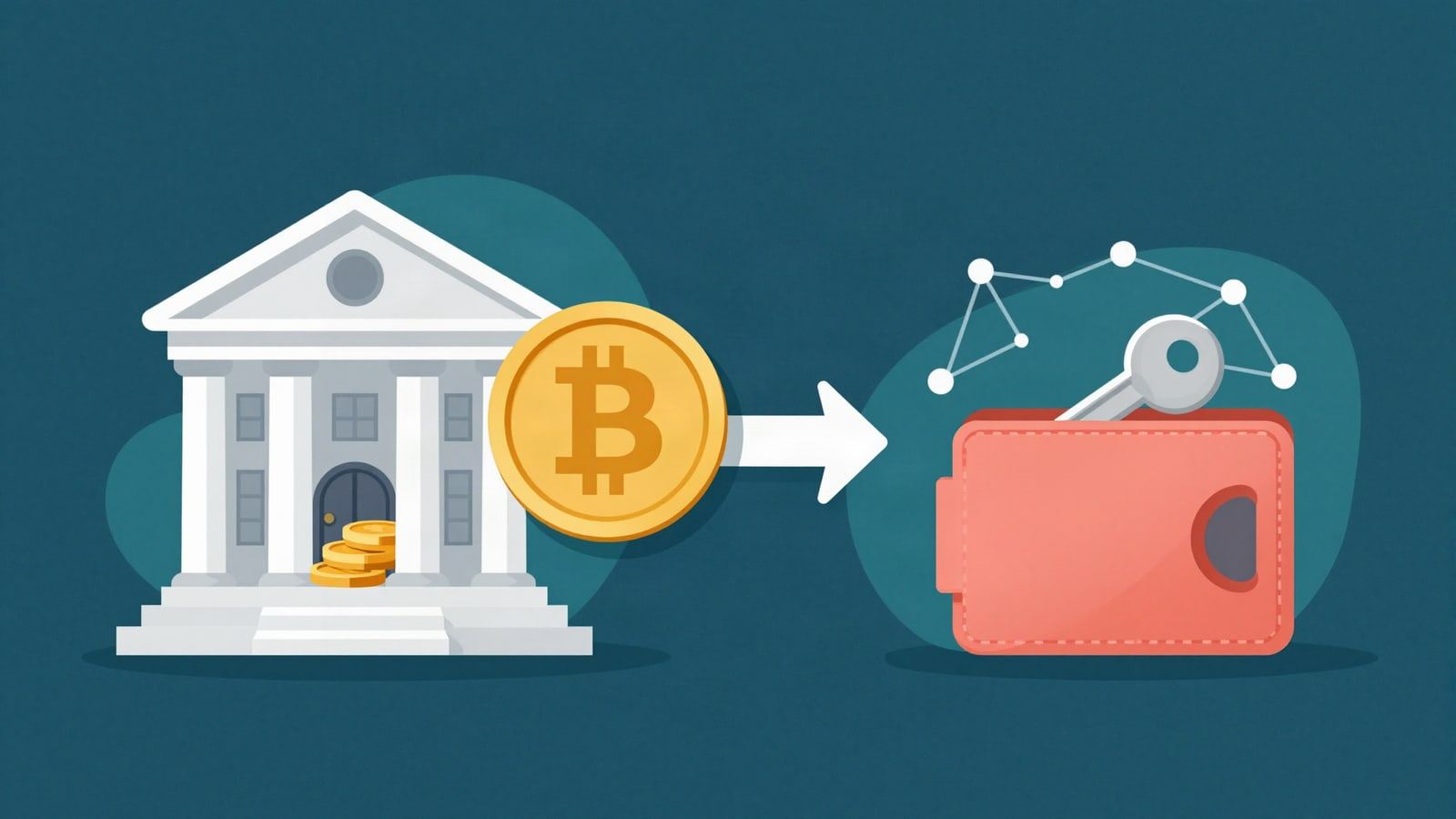
- Crypto withdrawals: usually a fixed amount per withdrawal of each coin, which may be higher than the actual network fee. Some platforms set it per network, so the same coin can cost more on one blockchain than on another.
- Cash withdrawals: a flat fee or a free allowance, depending on the method and currency.
Check both before you deposit. Withdrawing is how you take control of your crypto, or get your money back.
6. Other costs to watch
- Currency conversion: if you deposit in one currency and buy in another, for example pounds converted to dollars, there may be a conversion margin.
- Staking commission: platforms that stake for you usually keep a share of the rewards. See what is crypto staking.
- Leverage costs: borrowing or perpetual futures add interest or funding payments. Read our guide on leverage and derivatives before using them.
- Inactivity or account fees: less common, but they exist on some platforms.
Worked example: the real cost of a round trip
Imagine you put $1,000 into bitcoin and later take it out again. The fee levels below are illustrative only, to show how the pieces add up; your platform’s will differ.
| Step | Illustrative fee | Cost |
|---|---|---|
| Card deposit | 2% | $20.00 |
| Buy with the simple “Buy” button (spread) | 1% | $9.80 |
| Withdraw the bitcoin to your own wallet | Fixed fee | $5.00 |
| Later: send it back to sell, network fee | Varies | $3.00 |
| Sell on the trading screen (taker) | 0.4% | about $3.90 |
| Withdraw cash to your bank | Free | $0.00 |
| Total | about $41.70 |
That’s around 4.2% of the $1,000, before any change in the price of bitcoin, from fees that each looked small.
Now the same round trip done carefully: deposit by bank transfer (free), buy with a limit order on the trading screen (say 0.25% maker fee, $2.50), withdraw ($5.00), send back ($3.00) and sell with a limit order (0.25%, about $2.48). Total: about $13, roughly a third of the first route.
Fees and taxes
Fees are not just a cost: they can also affect your tax calculation. In the US, for example, the IRS says your basis includes the amount you paid plus the fees to make the purchase (FAQ 56). It also says that crypto used to pay network fees when moving it between your own wallets is a disposal, even though the transfer itself isn’t taxable (FAQ 81). Keep fee records together with your trades. See our tax guides for the US, the UK and Canada.
How to keep fees low
- Fund by bank transfer, not card, when you can.
- Use the trading screen instead of the simple buy button, and compare the two prices once to see the spread.
- Prefer limit orders when you’re not in a hurry, to pay maker fees.
- Withdraw less often, in larger amounts, because network and withdrawal fees are usually fixed per transaction.
- Check the network before withdrawing: some coins can be sent on more than one blockchain at very different costs. Sending to the wrong network can mean losing the funds, so double-check what your wallet supports.
- Read the fee page once a year. Platforms change their fees, and the cheapest choice today may not be next year.
Sources
- Gas and fees — ethereum.org (Ethereum documentation)
- Block chain guide (block reward and transaction fees) — Bitcoin developer documentation
- Types of Orders — Investor.gov (U.S. Securities and Exchange Commission)
- Frequently asked questions on digital asset transactions (FAQ 56 and 81) — Internal Revenue Service
First published . Spotted an error or an outdated figure? Tell us and we will check it against the source.