Crypto tax in the UK: how HMRC taxes your crypto in 2026/27
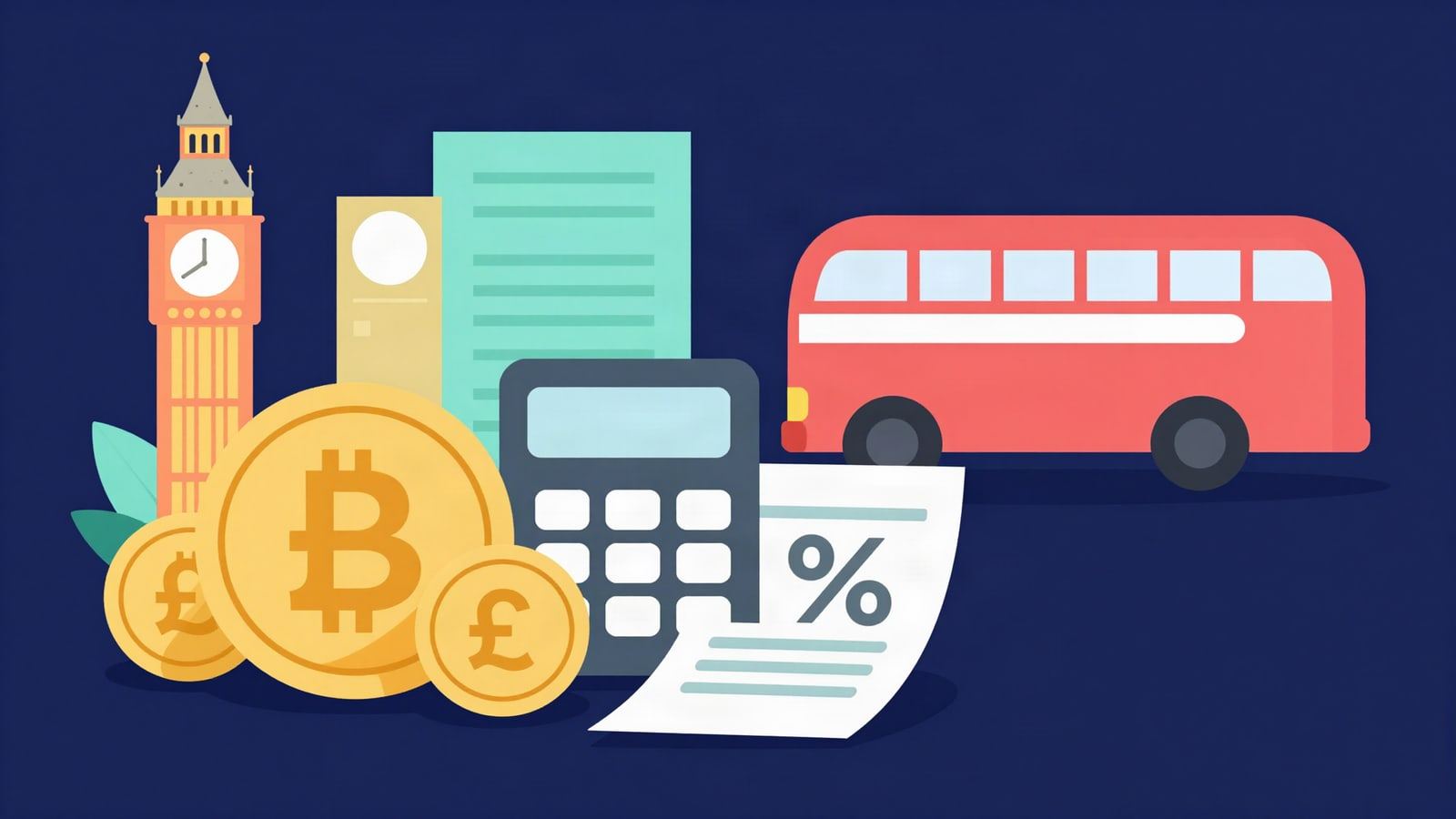
Capital Gains Tax at 18% or 24%, the £3,000 allowance, pooling and the 30-day rule, Income Tax on staking, and how to report it, from HMRC guidance.
Guides for readers in the United Kingdom: the rules that apply there, plus the guides that cover all three countries.
21 guides
Capital Gains Tax at 18% or 24%, the £3,000 allowance, pooling and the 30-day rule, Income Tax on staking, and how to report it, from HMRC guidance.
When staking rewards count as income, how they're valued, what happens when you sell them later, and the records to keep, from IRS, HMRC and CRA guidance.
How crypto ATMs (kiosks) work, the official loss figures from the FBI and FTC, the scam scripts that send victims to them, and the rules in the US, UK and Canada.
What spot bitcoin and ether ETFs and ETNs are, when they arrived in the US, Canada and the UK, and the trade-offs in fees, custody, protection and trading hours.
Who holds your crypto, how trades are matched, what you pay in fees, how each can fail, and how regulators and tax authorities treat them.
Every fee you can pay when you buy, sell and move crypto, how to spot the hidden ones, and a worked example of the real cost of a round trip.
How leverage, margin, liquidation and perpetual futures work, the maths of a 10x position, and the rules: the UK retail ban, Canada's leverage limits, and the CFTC.
What each order type does, what it guarantees and what it doesn't, with worked examples, and why crypto's 24/7 markets make stop orders trickier.
How crypto investment, crypto ATM and recovery scams work, the latest official loss figures, the warning signs, and exactly where to report in the US, UK and Canada.
How selling crypto at a loss can reduce your tax bill, and the rules that limit it: the US wash-sale question, the UK 30-day rule and Canada's superficial loss rule.
What dollar-cost averaging is, why your average cost ends up below the average price, how it compares with investing a lump sum, and the costs and risks to watch.
Whether giving crypto triggers tax, what the person receiving it inherits, the US $19,000 gift exclusion for 2026, and how donations to charity are treated.
What a crypto wallet really holds, the difference between exchange accounts, hot wallets and cold wallets, and how to split your crypto between them safely.
The official registers to check before you use a crypto exchange in the US, the UK or Canada, what registration does and doesn't protect, and the warning signs.
What to check before you open an account: registration where you live, who holds your crypto, fees, security, withdrawals, support and the protections you don't get.
What a recovery (seed) phrase is, safe ways to back it up, the mistakes that lead to theft or loss, and how to plan so your family can access your crypto.
Which protection schemes cover crypto in the US, UK and Canada (almost none), what they do cover, such as cash and crypto ETFs, and the claims to be wary of.
How criminals take over your phone number to break into exchange accounts, what the FBI and FCC say, and the 2FA and carrier settings that stop it.
What stablecoins are, how fiat-backed coins hold their peg, what can go wrong, and how the US GENIUS Act, the UK's new regime and Canada's CSA treat them.
Why bitcoin's block subsidy halves every 210,000 blocks, the 21 million cap, every halving so far, the next one, and what it means for the price.
How proof-of-stake staking works, the four ways to stake, from solo validators to exchanges, where rewards come from, and the risks, tax and rules to know.