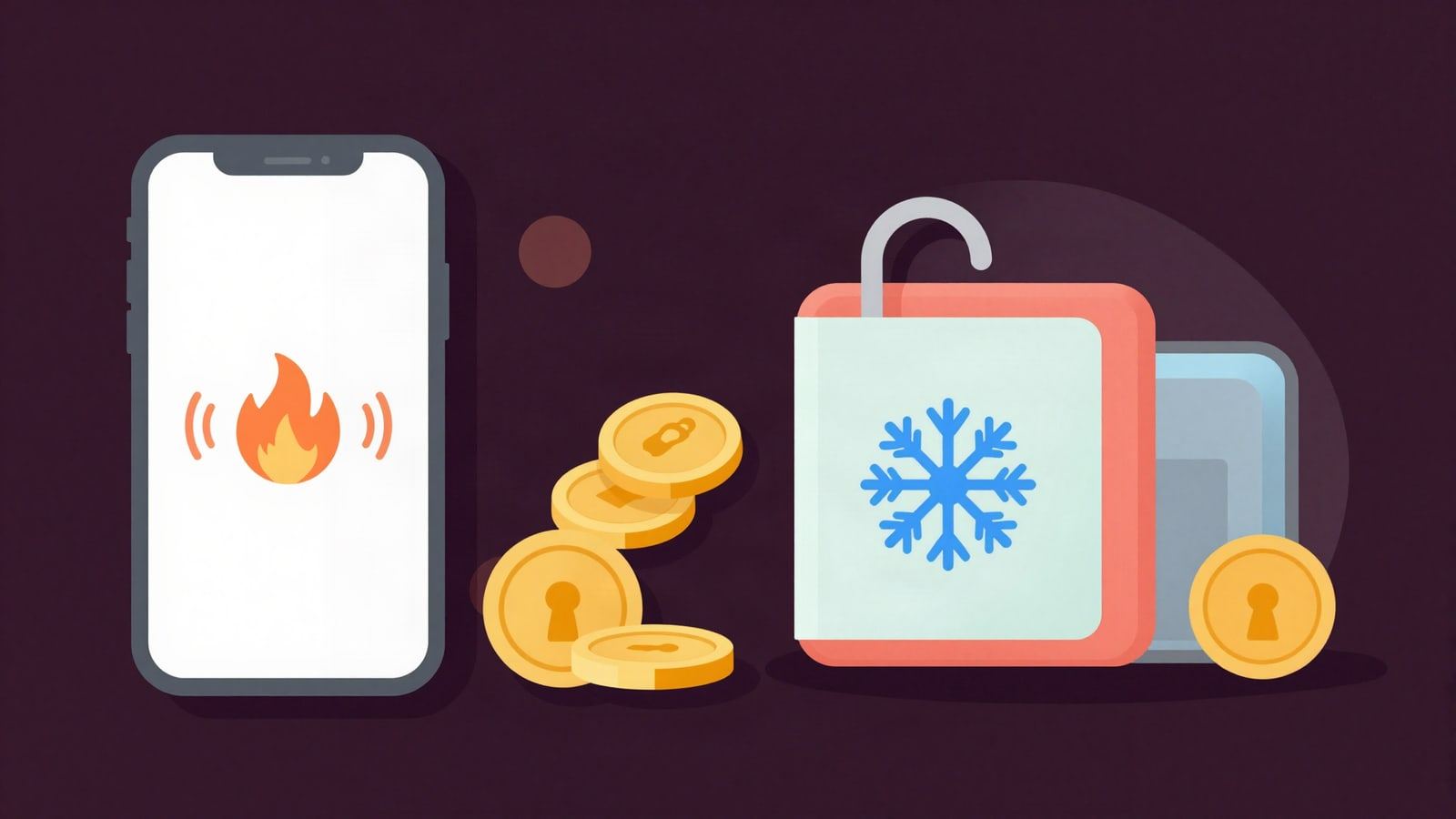
Hot vs cold crypto wallets: which one do you need?
What a crypto wallet really holds, the difference between exchange accounts, hot wallets and cold wallets, and how to split your crypto between them safely.
How to protect your money: the scams regulators see most, and where to report them.
29 guides
This section is about protecting your money: keeping your crypto and accounts secure, recognizing the scams that regulators and law enforcement warn about, and knowing what to do and where to report if something goes wrong.
It also covers the wider picture: major hacks and how stolen crypto is traced, how stablecoins and lending products can fail, and how crypto interacts with retirement accounts, benefits and student aid.
Where your crypto lives, how to protect the keys, how to report a scam, and what protection you do and do not have.
What a crypto wallet really holds, the difference between exchange accounts, hot wallets and cold wallets, and how to split your crypto between them safely.
What a recovery (seed) phrase is, safe ways to back it up, the mistakes that lead to theft or loss, and how to plan so your family can access your crypto.
How crypto investment, crypto ATM and recovery scams work, the latest official loss figures, the warning signs, and exactly where to report in the US, UK and Canada.
Which protection schemes cover crypto in the US, UK and Canada (almost none), what they do cover, such as cash and crypto ETFs, and the claims to be wary of.
Logins, approvals, fake apps, and the first steps if an account or wallet is compromised.
How criminals take over your phone number to break into exchange accounts, what the FBI and FCC say, and the 2FA and carrier settings that stop it.
How multisig wallets require several keys to approve a transaction, common setups like 2-of-3, why they remove single points of failure and their downsides.
What token approvals and allowances are, why apps ask for unlimited access, how a bad approval can drain your tokens, and how to check and revoke approvals safely.
How fake investment apps, cloned exchange websites and phishing messages steal crypto, real cases from the FBI, and a checklist to verify any app or site.
What to do if your crypto exchange account, email or wallet is hacked: securing accounts, moving funds, revoking approvals, reporting and avoiding follow-up scams.
How the most reported crypto scams work, the warning signs, and how to get help.
How "pig butchering" crypto scams work step by step, from a wrong-number text to fake profits and "withdrawal taxes", the warning signs, and where to report.
After a crypto scam, fake lawyers, "investigators" and fake FBI profiles offer to get your money back for a fee. How recovery scams work and how to avoid them.
How fake online jobs that pay you to like videos or "boost" products turn into crypto deposits, the FBI and FTC figures, the warning signs and what to do.
How scammers use AI hype to sell crypto trading bots and signal groups, the $1.7 billion Mirror Trading case, deepfake tactics and the checks regulators recommend.
How fake crypto giveaways and AI deepfake videos of celebrities work, the FTC and FBI warnings, how to spot a fake endorsement and what to do if you've sent crypto.
How scammers posing as tax officials, police or federal agents push victims to pay in crypto, the FBI's 2025 figures, what real agencies never do and how to report.
Why emails claiming to have hacked your webcam and demanding bitcoin are almost always bluffs, why they may quote your real password, and what to do.
How crypto Ponzi and pyramid schemes pay old investors with new money, SEC cases from BitConnect to HyperFund, the red flags and what to do if you're in one.
How crypto ATMs (kiosks) work, the official loss figures from the FBI and FTC, the scam scripts that send victims to them, and the rules in the US, UK and Canada.
Why people over 60 lose the most to crypto fraud, the FBI's 2025 figures, the scams most often used against them, warning signs for families and where to get help.
Why UK scam refund rules usually don't cover money sent to your own crypto exchange account, what they do cover, and what the Financial Ombudsman can still look at.
The largest thefts, who is behind them, and how stolen funds are traced and frozen.
What crypto mixers do, why regulators link them to laundering, the US sanctions on Blender, Tornado Cash and Sinbad, and what changed in 2025 and 2026.
How stablecoins and yield products can fail, and how banks and governments are getting involved.
What stablecoins are, how fiat-backed coins hold their peg, what can go wrong, and how the US GENIUS Act, the UK's new regime and Canada's CSA treat them.
How TerraUSD (UST) and LUNA were meant to hold a dollar peg, what happened in May 2022, what the SEC proved in court, and how stablecoin rules changed afterwards.
How crypto interest and "earn" accounts work, what went wrong at Celsius and BlockFi, the rules in the US, UK and Canada, and what to ask before lending.
How US regulators reopened crypto custody to banks in 2025: SAB 122, OCC letters 1183 and 1184, FDIC and Fed changes, safekeeping rules and what isn't insured.
What Executive Order 14233 created in March 2025, where the government's bitcoin comes from, the no-sale rule, the Digital Asset Stockpile and what it means.
How crypto is treated in retirement accounts, means-tested benefits and financial aid forms.
Can you hold crypto in a 401(k) or IRA? The Labor Department's 2022 warning and 2025 reversal, the 2025 executive order, the 2026 proposal and IRA risks.
SSI counts crypto such as bitcoin as a resource from the month after you get it, valued at the start of each month. The $2,000 limit, income rules and what to keep.
Cryptoassets count as capital for Universal Credit: the £6,000 and £16,000 limits, the £4.35 per £250 rule, reporting price changes, notional capital and records.