The US Strategic Bitcoin Reserve: what the executive order does and doesn't do
What Executive Order 14233 created in March 2025, where the government's bitcoin comes from, the no-sale rule, the Digital Asset Stockpile and what it means.
Figures checked against 5 official and primary sources on . See the sources · How we check
Key points
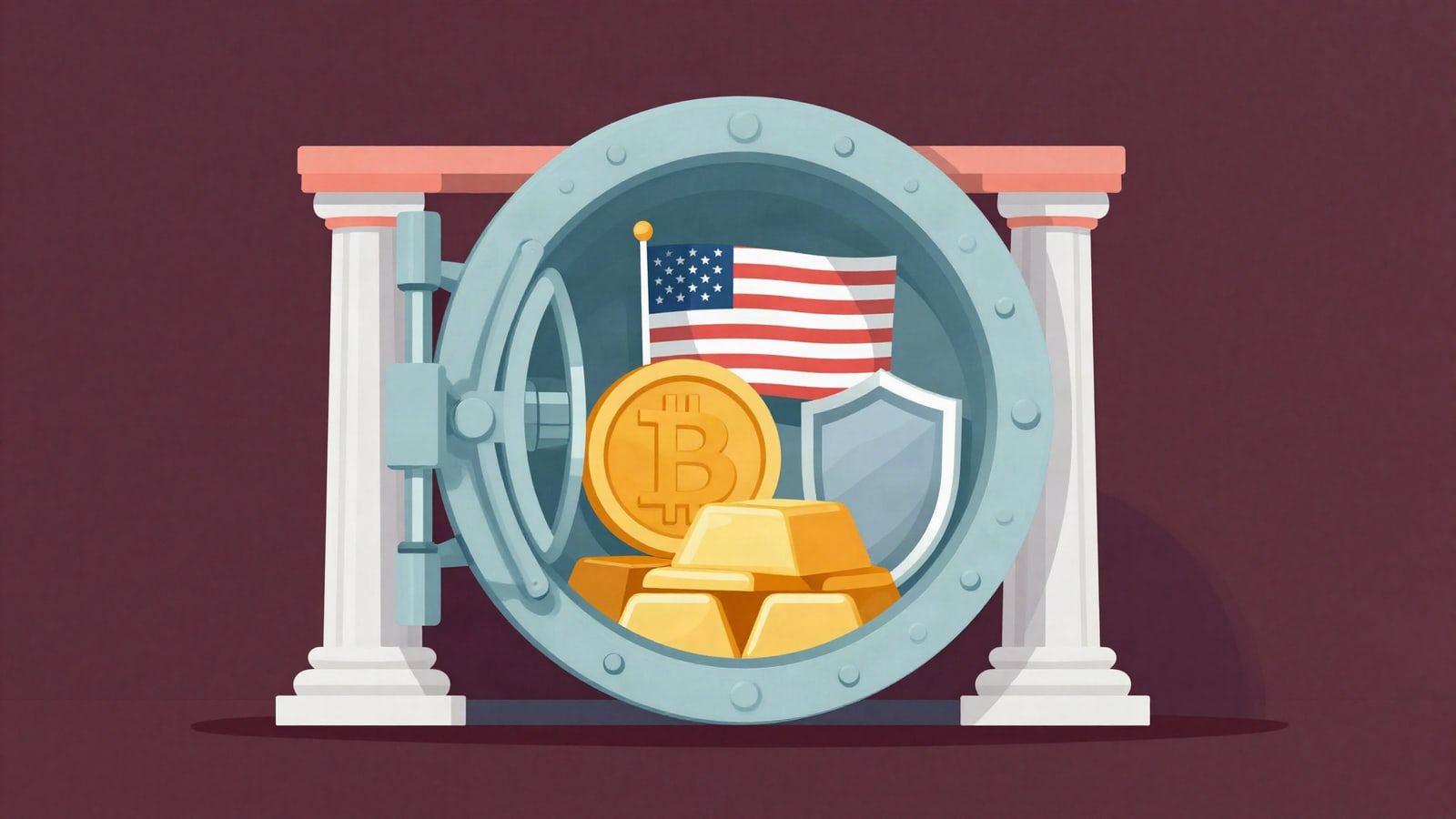
- On 6 March 2025, Executive Order 14233 set US policy to create a Strategic Bitcoin Reserve and a separate Digital Asset Stockpile for other crypto.
- The Reserve is funded with bitcoin the government has forfeited in criminal or civil cases, not with bitcoin bought on the market.
- Bitcoin in the Reserve shall not be sold. Any extra purchases must be budget neutral, with no extra cost to taxpayers.
- It doesn't change how your bitcoin is taxed or regulated, and it isn't an endorsement of bitcoin as an investment.
In this guide
In March 2025 the United States set an official policy of holding bitcoin as a reserve asset. Headlines called it the “Strategic Bitcoin Reserve”. But what does the order actually say? Is the government buying bitcoin? Can it sell it? And does any of it affect people who own crypto?
This guide goes through the executive order itself, the White House’s explanation and the follow-up report from the President’s Working Group on Digital Asset Markets.
What the order created
Executive Order 14233, signed on 6 March 2025 and published in the Federal Register on 11 March, set two policies:
- A Strategic Bitcoin Reserve, for bitcoin.
- A United States Digital Asset Stockpile, for the government’s other digital assets.
The Treasury Secretary was told to set up an office to administer the custodial accounts for each.
The order’s background section gives the reasoning: bitcoin’s protocol caps the supply at 21 million coins, it is often called “digital gold”, and because the supply is fixed there is, in the order’s words, a strategic advantage to being among the first nations to create a strategic bitcoin reserve. It says the government already held a significant amount of bitcoin but had no policy to manage it.
Where the bitcoin comes from
The Reserve is funded with bitcoin held by the Treasury that was finally forfeited in criminal or civil asset forfeiture proceedings, or received in satisfaction of a civil money penalty. In other words: bitcoin seized from crimes and fraud cases, once the legal process is complete.
Other agencies were given 30 days to review whether they could transfer their bitcoin to the Reserve, and to provide the Treasury and the President’s Working Group with a full accounting of all the digital assets they held.
The White House fact sheet said the order would begin to resolve the “disjointed handling” of seized crypto scattered across federal agencies, and claimed that premature sales of bitcoin had already cost taxpayers over $17 billion.
The no-sale rule, and its exceptions
The order says bitcoin deposited in the Reserve shall not be sold and will be kept as reserve assets of the United States.
But not every forfeited coin reaches the Reserve. The order lets agencies use forfeited digital assets, or the proceeds from them, to:
- return funds to identifiable and verifiable victims of crime;
- support law enforcement operations;
- share with state and local law enforcement partners; or
- meet other legal requirements for forfeited assets.
The Working Group’s July 2025 report confirmed that forfeited assets needed for these purposes will continue to be used for them. That matters if you were a victim of a crypto crime: the Reserve is not meant to take priority over compensating victims. See crypto scams and where to report them.
Buying more bitcoin: only if budget neutral
The order tells the Treasury and Commerce Secretaries to develop strategies for acquiring additional bitcoin, as long as they are budget neutral and impose no incremental costs on taxpayers. It doesn’t spell out what those strategies would be.
The rule for the Stockpile is stricter: the government won’t acquire other digital assets for it except through forfeiture or penalties, without further executive or legislative action. The fact sheet adds that the Treasury Secretary may consider strategies including potential sales from the Stockpile.
| Strategic Bitcoin Reserve | Digital Asset Stockpile | |
|---|---|---|
| Holds | Bitcoin | Other digital assets |
| Funded by | Forfeited bitcoin | Forfeited digital assets |
| Selling | Shall not be sold | Treasury decides on stewardship, which may include sales |
| Extra purchases | Only budget-neutral strategies | None without further action |
What happened next
The order gave the Treasury 60 days to deliver an evaluation of the legal and investment questions, including where the accounts should be held and whether any legislation is needed.
The President’s Working Group report, published in July 2025, said the Treasury had delivered those considerations to the White House and would keep working with the White House and others on next steps to operationalize the Reserve and the Stockpile. It also said custody would be studied by the Treasury and Commerce to safeguard the assets.
Policy in this area is still developing. For the latest position, check announcements from the Treasury and the White House.
States are building their own: the Texas reserve
The federal Reserve isn’t the only one. Texas created a Texas Strategic Bitcoin Reserve by law: Senate Bill 21, the Texas Strategic Bitcoin Reserve and Investment Act, was signed on 20 June 2025 and took effect immediately. It works quite differently from the federal version:
- Funding: the reserve is a special fund outside the state treasury, run by the state comptroller, and funded by money the legislature appropriates for it, rather than by seized coins.
- What it can buy: bitcoin, or other cryptocurrency with an average market capitalization of at least $500 billion over the most recent 24 months. Coins it receives from forks or airdrops are kept too.
- Selling: the comptroller may acquire, exchange, sell or hold investments as a prudent investor would. There’s no no-sale rule like the federal one.
- Custody: the comptroller can hire a qualified custodian using secure methods, including cold storage, and a regulated liquidity provider.
- Oversight: a five-member advisory committee advises on valuation and investment policy, and the comptroller must publish a report by 31 December of each even-numbered year showing the amount and estimated value of what the reserve holds.
In May 2026, the comptroller’s office named the advisory committee and asked firms to bid to provide custody and liquidity services. It said the firm chosen would also build a public website showing the reserve’s holdings.
| Federal Strategic Bitcoin Reserve | Texas Strategic Bitcoin Reserve | |
|---|---|---|
| Created by | Executive order (March 2025) | State law (June 2025) |
| Funded by | Forfeited bitcoin | Money appropriated by the legislature |
| Can hold | Bitcoin | Bitcoin and other crypto with a $500 billion+ average market cap |
| Selling | Shall not be sold | Allowed, as a prudent investor |
| Reporting | Agencies account for their holdings to the Treasury and the President’s Working Group | Public report every two years, plus a planned public website |
What it means for you
- Your taxes don’t change. The IRS treats digital assets as property, and the order doesn’t change that. See US crypto tax.
- Bitcoin isn’t legal tender. The order is about government holdings. See is crypto legal?
- It isn’t investment advice. A government holding seized bitcoin doesn’t make bitcoin less volatile or a suitable investment for you. See how to buy your first bitcoin safely.
- Beware of scams using the news. Fraudsters often borrow official-sounding names. No government reserve will contact you to buy, sell or “register” your bitcoin. See crypto scams and where to report them.
For the basics, see what is bitcoin? and the bitcoin halving explained.
Frequently asked questions
Is the US government buying bitcoin?
Does the Reserve mean bitcoin is now legal tender in the US?
Will the government ever sell the bitcoin?
Do any states have their own bitcoin reserve?
Is an executive order permanent?
Sources
- Executive Order 14233: Establishment of the Strategic Bitcoin Reserve and United States Digital Asset Stockpile (90 FR 11789) — Federal Register
- Fact Sheet: President Donald J. Trump Establishes the Strategic Bitcoin Reserve and U.S. Digital Asset Stockpile — The White House
- Texas Senate Bill 21 (89th Legislature): Texas Strategic Bitcoin Reserve and Investment Act, enrolled version — Texas Legislature Online
- Acting Texas Comptroller Kelly Hancock Names Strategic Bitcoin Reserve Advisory Committee Members (28 May 2026) — Texas Comptroller of Public Accounts
- Strengthening American Leadership in Digital Financial Technology (President's Working Group on Digital Asset Markets, July 2025) — The White House
First published . Spotted an error or an outdated figure? Tell us and we will check it against the source.