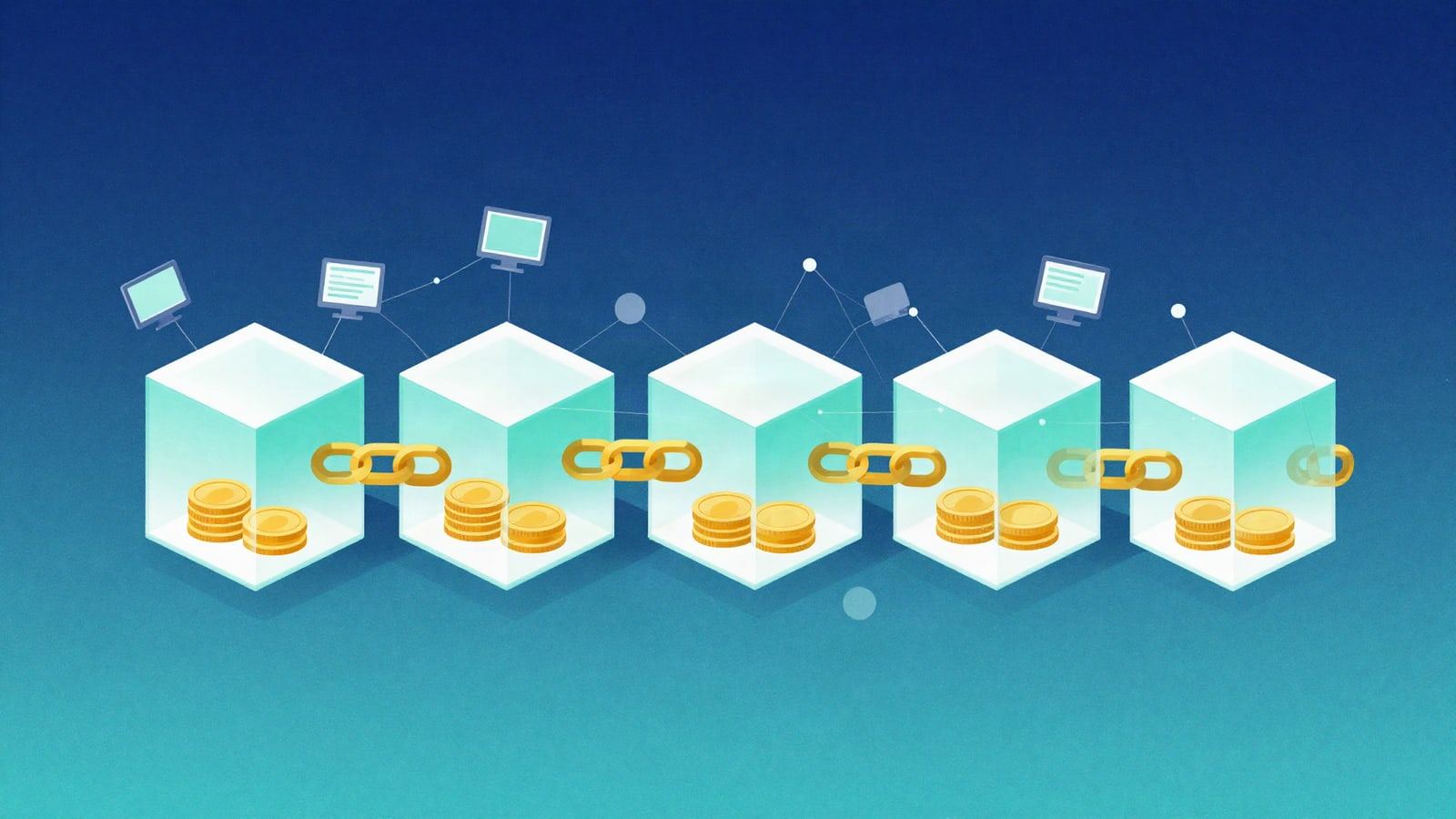
What is a blockchain? A plain-English guide based on NIST's overview
How a blockchain works, block by block: hashes, signatures, consensus, permissionless vs permissioned networks, and the limits that marketing usually leaves out.
Blockchain, bitcoin, Ethereum, DeFi, NFTs and the words you keep hearing, explained from primary sources without hype.
30 guides
How a blockchain works, block by block: hashes, signatures, consensus, permissionless vs permissioned networks, and the limits that marketing usually leaves out.
How crypto wallets use a private key, a public key and an address, which one you can share, how signatures prove ownership and why a lost key is final.
Bitcoin explained from its original white paper and source code: mining, the 21 million cap, keys and wallets, and how US, UK and Canadian authorities treat it.
A plain-English walk through Satoshi Nakamoto's nine-page bitcoin white paper: double spending, timestamps, proof of work, incentives, privacy and what it left out.
How bitcoin divides into 100 million satoshis, what mBTC, bits and sats mean, how fees are quoted in sat/vB, Lightning's millisatoshis and simple conversions.
What Ethereum is, how it differs from bitcoin, what ETH is for, how smart contracts and gas fees work, and what changed when it moved to proof of stake in 2022.
What smart contracts are, the vending machine idea behind them, what they do, why their code can't be changed after launch, the main risks and their legal status.
Why smart contracts can't read the outside world on their own, how oracles bring in prices and other data, centralized vs decentralized oracles and the risks.
What Ethereum's recent upgrades changed: cheaper layer 2 data with Dencun and Fusaka, smart accounts and staking changes in Pectra, and the roadmap ahead.
How Ethereum gas fees work: gas units, gwei, the burned base fee, tips, max fee and gas limit, why failed transactions still cost you, and how to pay less.
What layer 2 networks are, how optimistic and zero-knowledge rollups work, why fees are lower, the week-long withdrawal wait and the risks to check first.
What blockchain bridges do, lock-and-mint and other designs, trusted vs trustless bridges, why bridges are behind some of the biggest hacks and how to stay safe.
Bitcoin and Ethereum compared: what each is for, mining vs staking, supply, fees, speed, what you can build, how they're regulated and taxed, and the risks.
What bitcoin miners do, how proof of work and the difficulty adjustment keep blocks at about 10 minutes, solo vs pool mining, and how mining is taxed.
How proof of work (bitcoin) and proof of stake (Ethereum) secure a blockchain, how attacks are punished, energy use, decentralization and what each side argues.
What a 51% attack is on proof-of-work and proof-of-stake blockchains, what an attacker could and couldn't do, why confirmations matter, and what it means for you.
What hard and soft forks are, why blockchains split, what happened with Ethereum Classic, whether you get new coins and how the IRS and HMRC tax them.
Why quantum computers could one day break crypto wallet signatures, what's less at risk, NIST's post-quantum standards and what bitcoin and Ethereum are doing.
A checklist for sending bitcoin, ether or stablecoins safely: copying addresses, the right network, fees, test transactions, confirmations and address poisoning.
What a block explorer is, how to look up a transaction ID or address, what pending, failed and confirmed mean, and how explorers help with fees, scams and taxes.
Why a bitcoin transaction can sit unconfirmed for hours or days, how fees and the mempool work, and how replace-by-fee and child-pays-for-parent can speed it up.
How bitcoin's Lightning Network uses payment channels for near-instant, low-fee payments, how channels open and close, invoices, custodial wallets and the risks.
Yes, owning crypto is legal in the US, UK and Canada, but it isn't legal tender. Who regulates platforms, what's banned, and what legal doesn't mean.
What decentralized finance is, what people use it for, how it differs from banks and exchanges, and the risks highlighted by the Financial Stability Board.
What a DAO is, how token voting works, what happened to The DAO in 2016, why the SEC said its tokens were securities, and the CFTC case that held a DAO liable.
Non-fungible tokens explained: what an NFT is and isn't, what buying one gives you, the common scams, and how the IRS may treat NFTs as collectibles.
What a central bank digital currency (CBDC) is, how it differs from cash, bank money, stablecoins and bitcoin, and the official position in the US, UK and Canada.
What memecoins are, why their prices swing so wildly, what the SEC said in 2025 and 2026, how losses are treated for tax, and the scams to watch for.
What a crypto airdrop is, why projects give tokens away, how the IRS and HMRC tax them, and how fake airdrops are used to drain wallets.
From address to yield: the crypto words you keep hearing, explained in one or two sentences each, with links to our full guides and the official sources.