How to choose a crypto exchange: a 9-point checklist before you sign up
What to check before you open an account: registration where you live, who holds your crypto, fees, security, withdrawals, support and the protections you don't get.
Figures checked against 6 official and primary sources on . See the sources · How we check
Key points
- Start with the regulator: check that the platform is registered where you live, using the official register, not the platform's own claims.
- Find out which company actually holds your money and crypto, and in which country.
- Compare the total cost of buying, selling and withdrawing, not just the headline trading fee.
- Look for strong account security, such as app or hardware-key two-factor authentication and withdrawal address allow-lists, and turn it on.
- Remember what you don't get: in most cases there's no deposit insurance or compensation scheme for crypto.
In this guide
- 1. Is it registered where you live?
- 2. Which company holds your money, and where?
- 3. How does it look after your crypto?
- 4. What will it really cost?
- 5. Security features you should actually use
- 6. Can you get your money out easily?
- 7. Which coins and features do you need?
- 8. Support and track record
- 9. Know what protection you don’t have
- Exchange or your own wallet?
- Quick checklist
Choosing an exchange is the first real decision most people make in crypto, and often the most important one. A good platform won’t make you money, but a bad one can lose it for you: through hidden costs, weak security or, in the worst cases, a collapse that freezes everything inside.
This checklist goes from the things that matter most, regulation and custody, to the things that are merely annoying when they go wrong, such as support and withdrawal limits. It works whether you’re in the US, the UK, Canada or elsewhere.
1. Is it registered where you live?
This is the single most useful check, and it takes five minutes. Every major jurisdiction now expects crypto platforms that serve its residents to be registered or licensed:
- UK: crypto businesses must register with the FCA under the Money Laundering Regulations, and a fuller authorization regime starts in October 2027.
- Canada: crypto trading platforms must be registered with provincial or territorial securities regulators. The CSA publishes lists of authorized, pending and banned platforms, and warns that platforms located outside Canada that serve Canadians must be registered too.
- US: exchanges register with FinCEN as money services businesses and hold state money transmitter licenses. New York has its own license.
Always check the official register, not a badge on the platform’s website. Our step-by-step guide shows exactly where: how to check if a crypto exchange is registered.
2. Which company holds your money, and where?
Big brands often operate through several companies in different countries. The one in your terms of service is the one you’d be dealing with if something went wrong. Before you deposit, find out:
- The legal name of the company you’re contracting with.
- The country it’s based in, which decides which courts and insolvency rules apply.
- Whether that company, or a sister company, is the one that’s registered in your country.
If the terms of service point to a company in a country with no crypto regulation, treat that as a warning sign, however familiar the brand.
3. How does it look after your crypto?
On a centralized exchange, the platform holds your crypto for you. Questions worth asking, and that good platforms answer publicly:
- Are customer assets kept separate from the company’s own money?
- Does the platform lend out or reuse customer crypto (for example, for lending or staking products)? If it does, read exactly when.
- What share is kept in cold storage (offline)?
- Does it publish any proof of reserves or audited financial statements?
None of these answers makes a platform risk-free, but vague answers or none at all are informative.
4. What will it really cost?
Fees are where platforms differ most, and where comparisons are most misleading. Look at the whole round trip:
- Deposit fees, by bank transfer and by card. Card deposits are usually the most expensive.
- Trading fees, often different for “maker” and “taker” orders.
- The spread on “instant buy” or “simple” buttons, which can cost far more than the advertised trading fee.
- Withdrawal fees, both for crypto (network and platform fees) and for cash back to your bank.
We break these down with examples in crypto exchange fees explained.
5. Security features you should actually use
A platform can only protect your account as well as you let it. Look for, and switch on:
- Two-factor authentication (2FA) with an authenticator app or a hardware security key. SMS codes are the weakest option, because of SIM swap attacks. See our guide on SIM swaps and 2FA.
- Withdrawal address allow-lists, so crypto can only be sent to addresses you approved in advance, often with a waiting period for new ones.
- Login and withdrawal alerts by email or app.
- Anti-phishing codes that appear in genuine emails from the platform.
6. Can you get your money out easily?
Before depositing a large amount, try a small withdrawal, both crypto to your own wallet and cash to your bank. Check:
- Daily or monthly withdrawal limits, and what verification is needed to raise them.
- How long bank withdrawals take.
- Whether some coins can be bought but not withdrawn to an external wallet. Some apps only let you sell back to them.
If moving your crypto off the platform is hard, you depend entirely on that platform staying healthy.
7. Which coins and features do you need?
Most people need far less than platforms advertise. If you only want to buy and hold a couple of large cryptocurrencies, a simple, well-regulated platform with low fees for that is better than one listing hundreds of tokens.
Be cautious with:
- Leverage and derivatives, which are banned for retail customers in the UK and restricted in Canada. See what’s allowed in the US, UK and Canada.
- “Earn” or yield products, where you lend your crypto to the platform or a third party. Higher returns mean more risk, and in an insolvency these assets may be treated very differently from simple custody.
8. Support and track record
When something goes wrong, for example a stuck transfer, a locked account or a suspicious login, you need a human. Check:
- Is there live support, or only a chatbot and email?
- Does the platform have a complaints process, and is there an external body you can escalate to in your country?
- Search for the platform’s name alongside “regulator”, “warning” or “enforcement” to see whether any regulator has taken action against it.
9. Know what protection you don’t have
This is the point most people miss. In most cases your crypto is not insured the way a bank deposit is:
- The FDIC says deposit insurance doesn’t apply to crypto assets, and doesn’t protect against the failure of non-bank companies such as crypto exchanges, custodians and wallet providers.
- In the UK, the FCA says registration as a crypto business doesn’t bring Financial Ombudsman or FSCS protection.
- In Canada, the CSA warns that platforms that don’t comply with securities law may not adequately safeguard your assets.
Our guide is your crypto insured? explains what is and isn’t covered in each country.
Exchange or your own wallet?
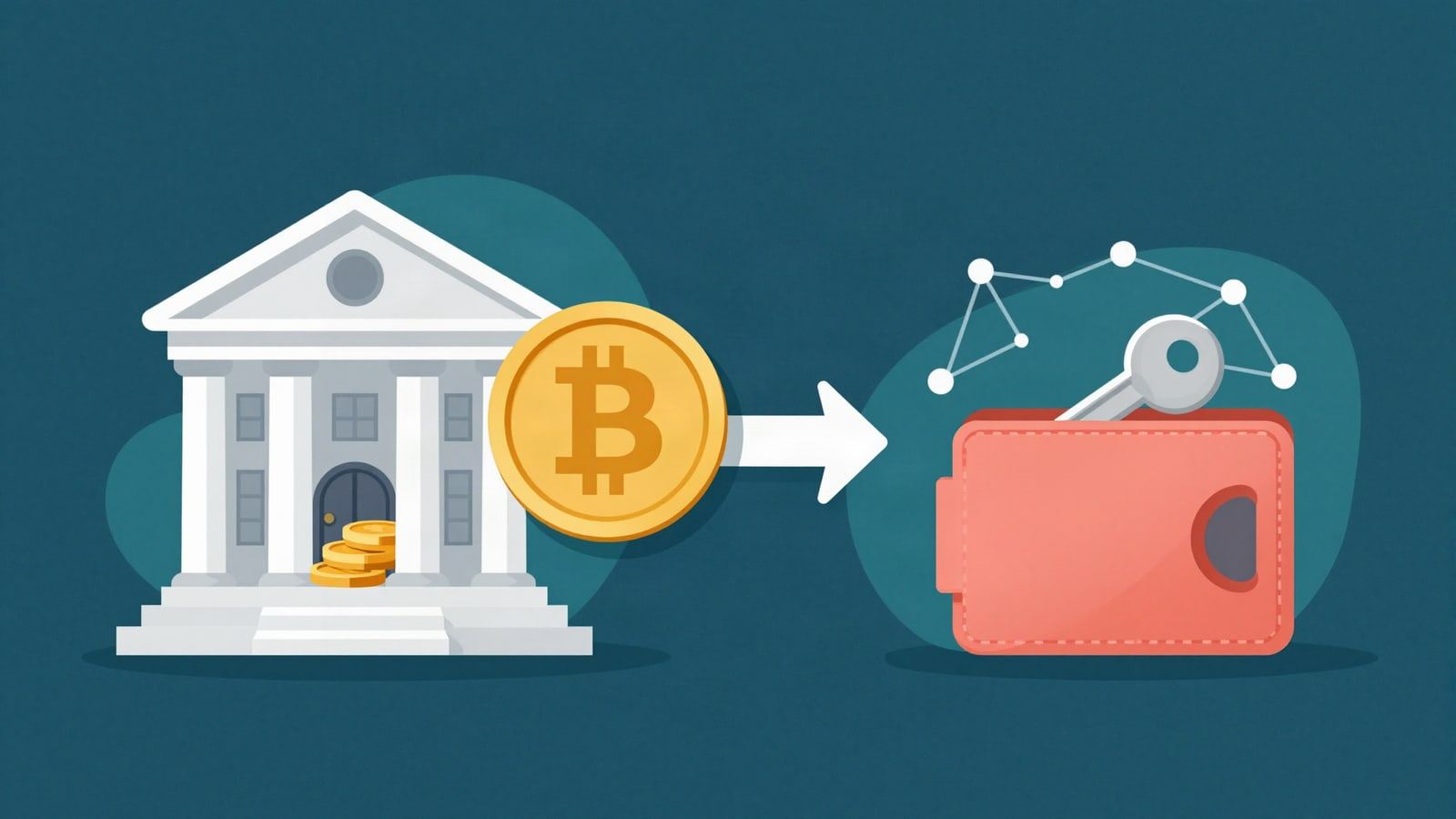
An exchange is the easiest way to buy crypto with dollars, pounds or Canadian dollars. Whether you keep it there is a separate decision. Holding crypto in your own wallet removes the risk of the platform failing, but makes you fully responsible for your keys. As the Ethereum documentation puts it, if you keep crypto on a centralized exchange, you’re trusting that exchange with custody of your funds.
Many people do both: they buy on a registered exchange and move long-term holdings to a wallet they control. See hot vs cold wallets and our CEX vs DEX comparison.
Quick checklist
- Registered with the right regulator where you live, according to the official register.
- You know which company holds your money and where it’s based.
- Clear answers on custody, segregation and lending of customer assets.
- Total cost compared: deposit, spread, trading and withdrawal.
- App or hardware-key 2FA and withdrawal allow-lists turned on.
- A small test withdrawal done before you deposit more.
- Only the features you need. Be wary of leverage and yield products.
- Reachable support and a clean regulatory record.
- No illusions about insurance: only keep there what you can afford to lose.
Sources
- Crypto Platforms: Regulation and Enforcement Actions — Canadian Securities Administrators
- Cryptoassets: AML / CTF regime — Financial Conduct Authority
- MSB Registrant Search — Financial Crimes Enforcement Network (FinCEN)
- Fact Sheet: What the Public Needs to Know About FDIC Deposit Insurance and Crypto Companies — Federal Deposit Insurance Corporation
- Customer Advisory: Understand the Risks of Virtual Currency Trading — Commodity Futures Trading Commission
- Wallets — ethereum.org (Ethereum documentation)
First published . Spotted an error or an outdated figure? Tell us and we will check it against the source.