Peer-to-peer (P2P) crypto trading: how it works and the risks of buying from strangers
How peer-to-peer crypto marketplaces and individual traders work, the US, UK and Canadian rules, payment fraud and money mule risks, and safer alternatives.
Figures checked against 6 official and primary sources on . See the sources · How we check
Key points
- In P2P trading you buy or sell crypto directly with another person, often matched through a website or app, paying by bank transfer, payment app or cash.
- In the US, FinCEN says someone who buys and sells crypto as a business is a money transmitter and must register, even if they trade informally.
- In the UK, the sanctions office OFSI noted in 2025 that no P2P trading platforms are registered with or permitted by the FCA.
- The main risks: payment fraud, being used as a money mule, dealing with criminals or sanctioned parties, and having no one to complain to.
In this guide
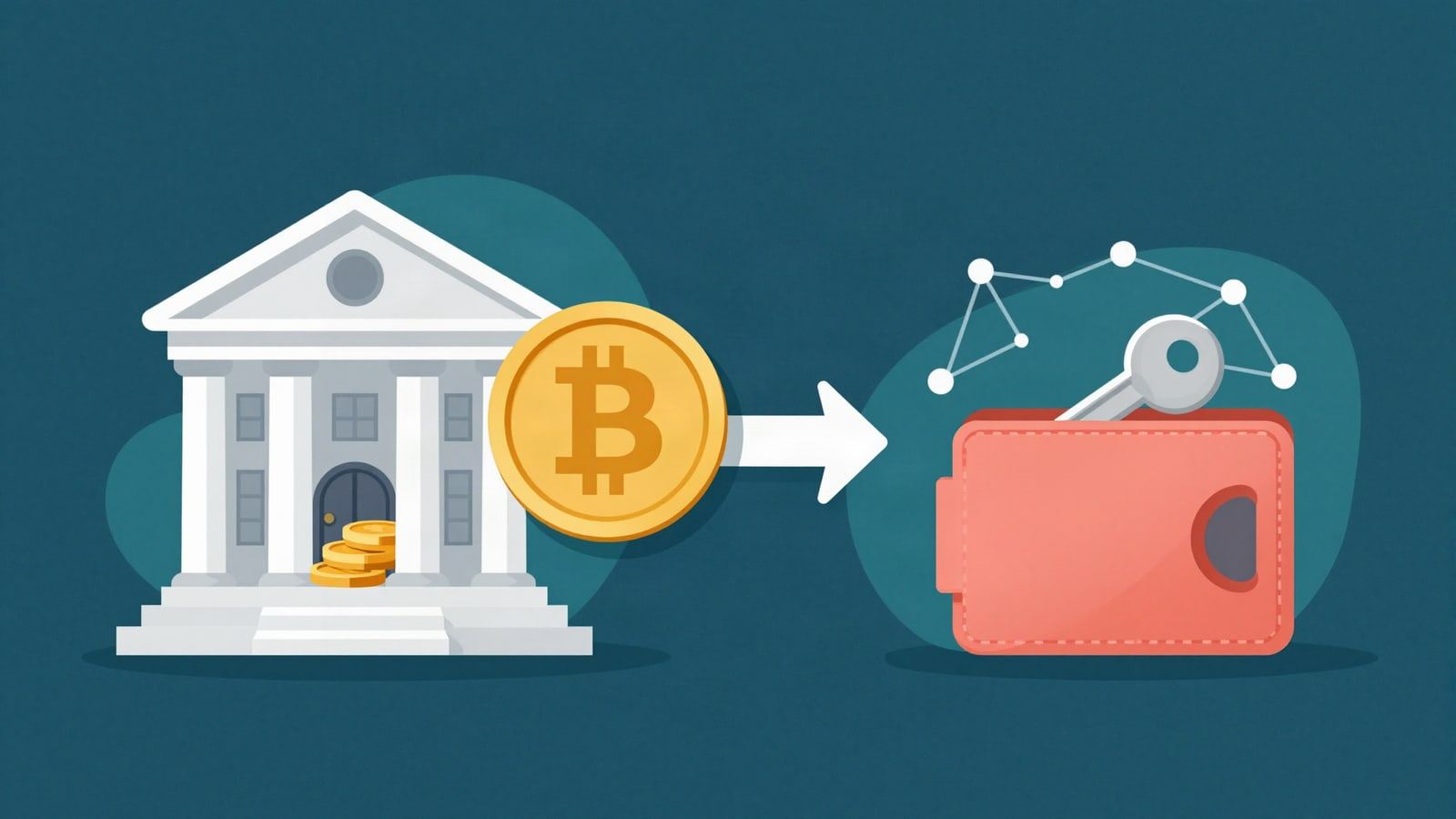
Peer-to-peer (P2P) trading means buying or selling crypto directly with another person instead of with an exchange. It can happen on dedicated marketplaces that match buyers and sellers, in online groups, or face to face. People use it when they can’t or don’t want to use an exchange, or because the price looks better.
It can also expose you to fraud, to criminal money, and to rules you might not realize apply. This guide explains how P2P trading works, what US, UK and Canadian authorities have said about it, and how to protect yourself.
How P2P trading works
FinCEN, the US Treasury’s financial crimes bureau, describes the basics:
- P2P exchangers are typically individuals in the business of buying and selling crypto.
- They advertise through classified ads, dedicated platform websites, online forums, social media and word of mouth.
- They may trade online or meet customers in person.
- Typically, once the buyer has delivered the money or crypto, the seller sends the agreed crypto in return.
Some P2P platforms only let buyers and sellers find each other, while others hold the crypto in escrow during a trade or act as a go-between. FinCEN says a platform that only provides a forum for bids and offers, with the parties settling elsewhere, isn’t a money transmitter; one that buys from the seller and sells to the buyer is acting as an exchanger.
What the rules say
United States. FinCEN says a person operating as a P2P exchanger in the business of money transmission must comply with the Bank Secrecy Act as a money transmitter, regardless of how regular or formal their trades are, or where they operate from. That means registering with FinCEN as a money services business and having anti-money-laundering, record-keeping and reporting procedures. Someone trading infrequently and not for profit is exempt.
In practice, FinCEN says P2P exchangers that are money transmitters must:
- register with FinCEN as a money services business;
- set up and maintain an effective anti-money-laundering program;
- file Suspicious Activity Reports and Currency Transaction Reports, the latter for cash transactions of more than $10,000;
- keep certain records.
United Kingdom. Firms offering crypto exchange services must be registered with the FCA. In its July 2025 threat assessment, the UK’s sanctions office, OFSI, noted that no P2P trading platforms are currently registered with, or permitted by, the FCA. OFSI also lists the use of P2P exchange services among red flags for sanctions evasion, and assesses that Russian P2P platforms are likely facilitating sanctions evasion.
Canada. Businesses dealing in virtual currency are reporting entities with FINTRAC obligations, including reporting when they receive crypto worth C$10,000 or more in one transaction or within 24 hours. See is crypto legal?
A real case: the first penalty against a P2P exchanger
In April 2019, FinCEN announced its first enforcement action against a peer-to-peer crypto exchanger. According to FinCEN, the individual:
- advertised online to buy and sell bitcoin, and completed trades by exchanging cash in person, through the mail or by wire transfer;
- never registered as a money services business and had no written anti-money-laundering procedures;
- processed numerous suspicious transactions without reporting them, including business linked to the darknet marketplace Silk Road;
- carried out more than 200 transactions involving over $10,000 in cash without filing a single Currency Transaction Report, including about 160 bitcoin purchases worth around $5 million, paid in cash in public places such as coffee shops.
The exchanger paid a $35,000 fine and agreed to an industry bar on providing money transmission services. FinCEN’s director said BSA obligations apply to money transmitters “regardless of their size”.
The case shows both sides of P2P risk: the trader faced penalties for ignoring the rules, and the customers were dealing with someone who did no checks on who they were or where their money came from.
The risks
Payment fraud
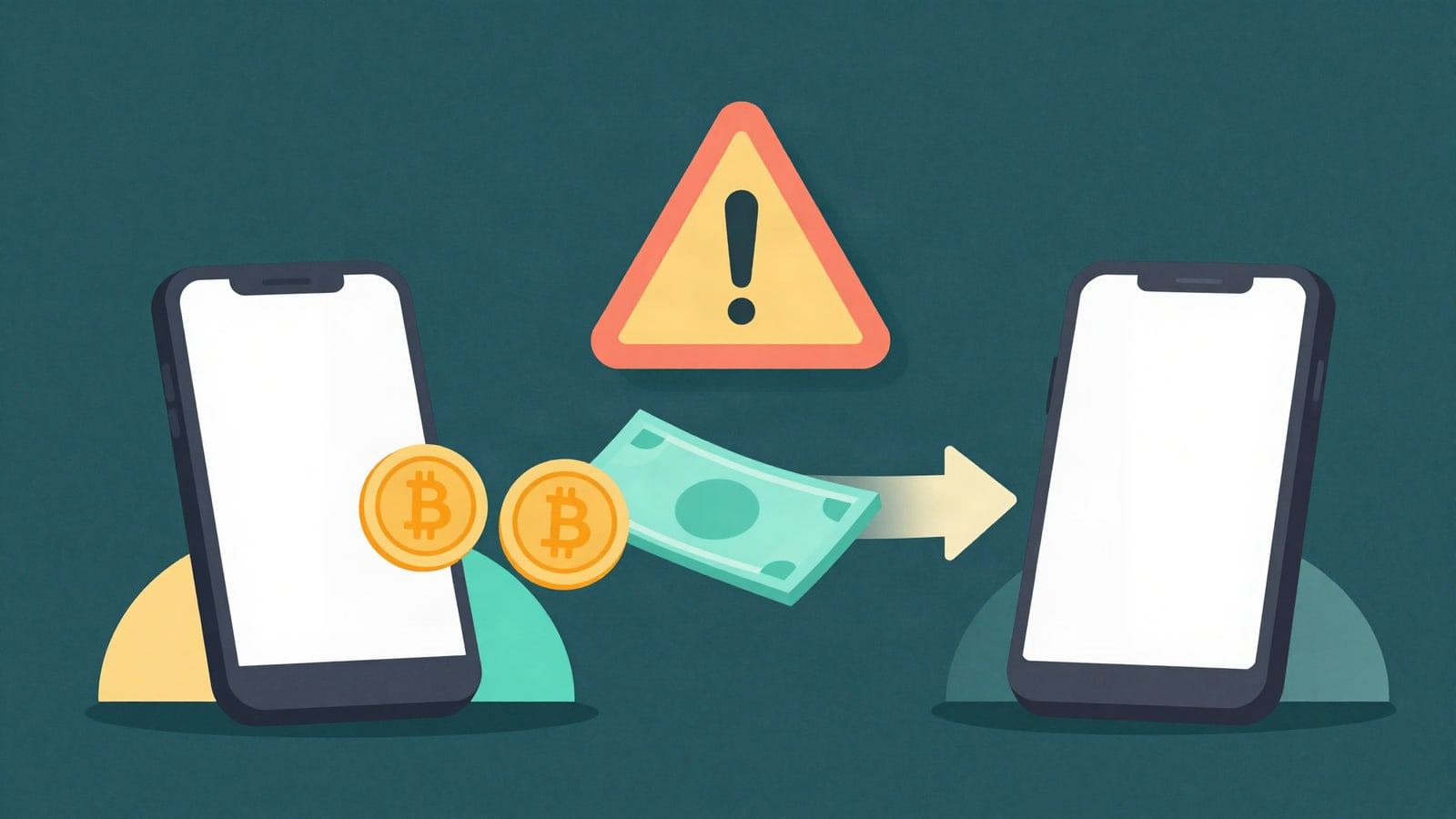
The most common problem is simple: one side doesn’t pay, or pays in a way that can be reversed or turns out to be fake. Examples include:
- a screenshot of a payment that never happened;
- a payment that’s later reversed or reported as fraud;
- crypto that’s never sent after you’ve paid.
On a platform with escrow and dispute resolution, some of this can be handled. Trading directly with strangers, you may have no recourse.
Being used as a money mule
P2P trades can appeal to people trying to move stolen money. If someone pays you with funds taken from a scam victim, you could face questions from your bank, or find your account restricted. The Canadian Anti-Fraud Centre warns: never agree to receive funds into your personal bank account to forward elsewhere, because you may be acting as a money mule and contributing to money laundering.
Dealing with criminals or sanctioned parties
You don’t know who’s on the other side. OFSI’s warning about P2P platforms and sanctions evasion is a reminder that a P2P counterparty could be anyone. See crypto mixers and sanctions.
Personal safety
FinCEN notes that some P2P exchangers arrange to meet customers in person. Meeting a stranger carrying cash or valuable crypto carries obvious risks.
No protection or complaints route
There’s usually no regulator, deposit insurance or ombudsman to help if a P2P trade goes wrong. The FTC notes that crypto payments don’t come with legal protections and typically aren’t reversible.
If you still use P2P
- Prefer a platform with escrow and a clear dispute process, and check whether it’s registered where you live.
- Trade only with verified, established counterparties, and start small.
- Confirm payment in your own bank account before releasing crypto. Don’t rely on screenshots or emails.
- Refuse third-party payments, and never move money for someone else.
- Avoid in-person cash trades with strangers.
- Keep records for tax: date, amount, price, fees and counterparty details.
Taxes and records
Selling or swapping crypto is generally a taxable disposal wherever the trade happens. P2P makes record-keeping harder, not optional:
- US: brokers report sales on Form 1099-DA. If you trade directly with another person, there’s no broker to send you one, so your own records are all you’ll have. See Form 1099-DA explained.
- UK and Canada: the same capital gains rules apply as on an exchange. See UK crypto tax and Canada crypto tax.
Save the trade details, the payment confirmation from your own bank account and the blockchain transaction ID for each trade.
Safer alternatives
For most people, a registered exchange or broker is the simpler route to buy or sell, even if fees are a little higher. See how to choose a crypto exchange, how to buy your first bitcoin safely and how to cash out crypto.
Frequently asked questions
Is P2P crypto trading legal?
Someone wants to pay me from a third party's bank account. Is that OK?
Is P2P cheaper than an exchange?
I sell some bitcoin to friends now and then. Do I need to register with FinCEN?
Do P2P trades count for tax?
Sources
- Application of FinCEN's Regulations to Certain Business Models Involving Convertible Virtual Currencies (FIN-2019-G001) — Financial Crimes Enforcement Network (FinCEN)
- FinCEN Penalizes Peer-to-Peer Virtual Currency Exchanger for Violations of Anti-Money Laundering Laws (18 April 2019) — Financial Crimes Enforcement Network (FinCEN)
- Sanctions compliance in the Cryptoassets sector: Threat Assessment (July 2025) — Office of Financial Sanctions Implementation (GOV.UK)
- Job fraud (money mules and crypto job fraud) — Canadian Anti-Fraud Centre
- Reporting large virtual currency transactions to FINTRAC — Financial Transactions and Reports Analysis Centre of Canada (FINTRAC)
- What To Know About Cryptocurrency and Scams — Federal Trade Commission (consumer advice)
First published . Spotted an error or an outdated figure? Tell us and we will check it against the source.