How to cash out crypto to your bank account safely, and what it means for your taxes
The main ways to turn crypto into dollars, pounds or Canadian dollars, the checks to expect, why selling is usually taxable and how to avoid withdrawal scams.
Figures checked against 7 official and primary sources on . See the sources · How we check
Key points
- The usual route is to sell on a registered exchange and withdraw to a bank account in your own name. Test with a small amount first.
- Selling crypto for cash is generally a taxable disposal in the US, UK and Canada. Work out your gain or loss and keep records.
- Expect identity checks. In Canada, businesses must report when they receive crypto worth C$10,000 or more, including several amounts within 24 hours.
- Never pay a "fee" or "tax" to unlock a withdrawal from a platform that won't let you take your money out: that's a classic scam.
In this guide
- The main routes
- Step by step: cashing out through an exchange
- Crypto ATMs: a costly and risky exit
- Never cash out for someone else
- Identity checks and reporting
- Taxes: selling is usually a disposal
- What gets reported about your sales
- Timing and the tax bill
- Watch out for withdrawal scams
- Records to keep
- A note on protection
Buying crypto is easy. Getting money back into your bank account takes a bit more planning: choosing the right route, expecting identity checks, avoiding the scams that target people trying to withdraw, and remembering that selling is usually a taxable event.
This guide covers the main ways to cash out, what to expect and how to keep it simple at tax time.
The main routes
| Route | How it works | Watch out for |
|---|---|---|
| Sell on an exchange | Sell for dollars, pounds or Canadian dollars, then withdraw to your bank | Fees, withdrawal limits, identity checks |
| Broker or payments app | Sell inside the app that holds your crypto | Some apps don’t let you move crypto out, only sell back to them |
| Peer-to-peer (P2P) | Sell directly to another person | Fraud, fake payment confirmations, legal risks |
| Crypto ATM | Some machines buy crypto for cash | High fees; illegal to operate in the UK without registration |
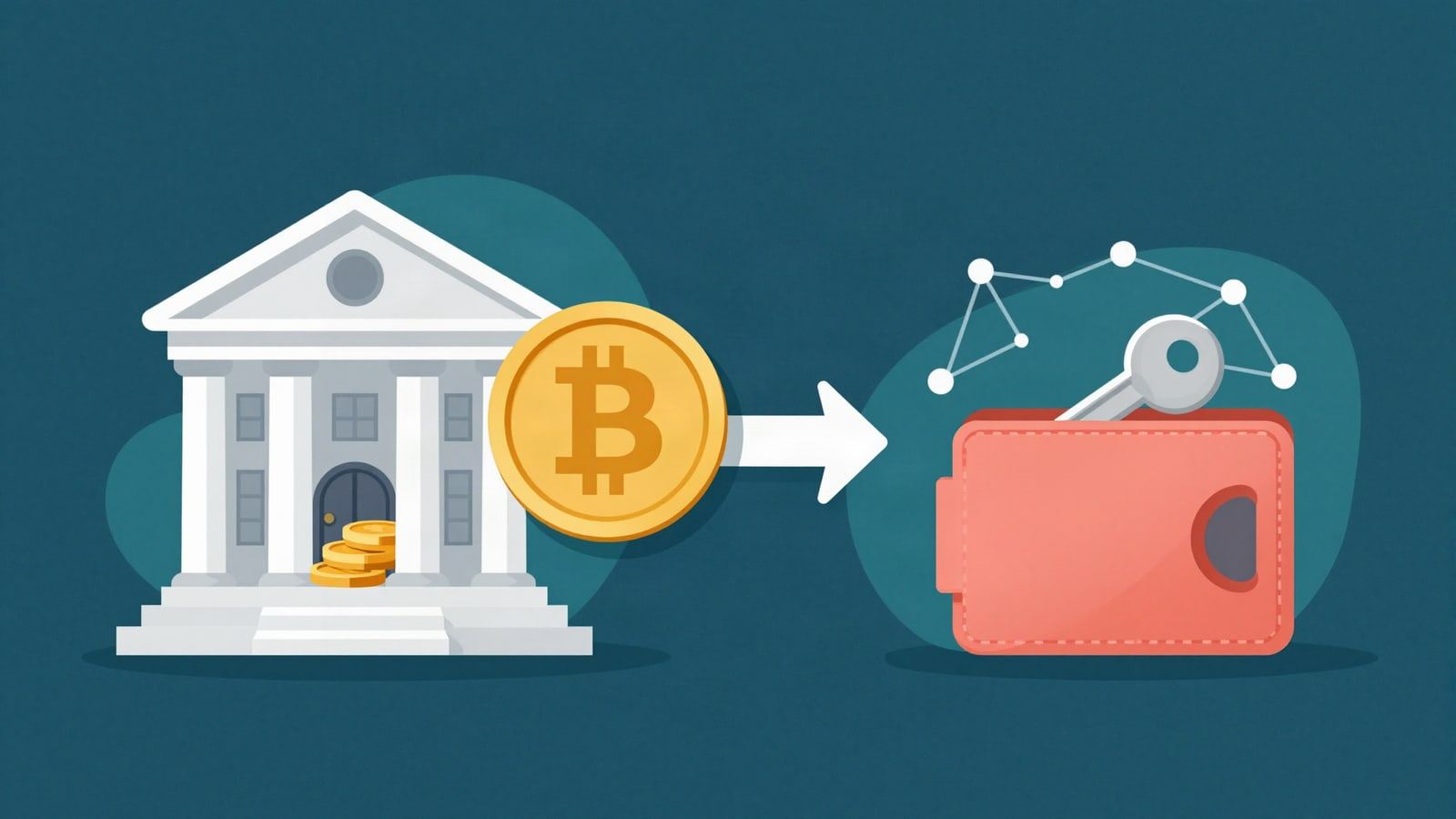
For most people, selling on a registered exchange and withdrawing to their own bank account is the simplest and safest option.
Step by step: cashing out through an exchange
- Use a registered platform. Check it’s registered where you live. See how to check a crypto exchange is registered.
- Move crypto in carefully if it’s in your own wallet: check the deposit address and network, and send a small test first. See how to send crypto safely.
- Sell for your local currency. Check the spread and fees. See crypto exchange fees explained.
- Withdraw to a bank account in your own name, never to an account someone else gives you.
- Start small and confirm the money arrives before withdrawing larger sums.
- Download your records of the sale and withdrawal.
Crypto ATMs: a costly and risky exit
Some crypto ATMs will buy crypto from you for cash. They’re best avoided for most people:
- Cost: ATMs typically charge a transaction fee plus a markup on the exchange rate, so you usually get less than selling on a registered exchange.
- Scams: the FBI and FTC report large losses linked to crypto ATMs, mostly from scams where victims are told to deposit cash. See bitcoin ATMs: risks and scams.
- UK: the FCA says none of the registered crypto firms is approved to offer crypto ATM services, so any crypto ATM operating in the UK is doing so illegally.
Never cash out for someone else
If a stranger, an online “employer” or a new romantic contact asks you to sell crypto and send them the money, or to receive money into your account and pass it on, stop. The Canadian Anti-Fraud Centre warns this can make you a money mule, helping to launder criminal money. See crypto job and task scams.
Identity checks and reporting
Expect a regulated platform to verify your identity, and sometimes to ask where funds came from. That’s anti-money-laundering law, not a sign of a problem. See why your exchange wants your ID.
In Canada, FINTRAC requires reporting businesses to file a Large Virtual Currency Transaction Report when they receive virtual currency worth C$10,000 or more in a single transaction, or in two or more amounts totalling C$10,000 or more within 24 consecutive hours from the same person. These reports are routine compliance, not an accusation.
Taxes: selling is usually a disposal
United States: the IRS treats digital assets as property. Selling them for dollars is a disposal, and you need to calculate a capital gain or loss using your basis, which is generally what you paid in dollars. Gains on assets held more than one year are long-term; one year or less, short-term. See US crypto tax.
United Kingdom: HMRC says you may need to pay Capital Gains Tax when you sell cryptoassets. You add up gains for the tax year and deduct allowable losses; only gains above the £3,000 annual allowance are taxed. See UK crypto tax.
Canada: selling crypto for Canadian dollars is a disposition, and gains or losses are generally capital, unless you’re carrying on a business. See Canada crypto tax.
Swapping crypto for another token or a stablecoin is also generally a disposal in all three countries, so cashing out “into a stablecoin” doesn’t avoid tax.
What gets reported about your sales
Selling is visible to tax authorities more than ever:
- United States: from 2025, brokers report sales of digital assets on Form 1099-DA, with cost basis for certain assets from 2026. See Form 1099-DA explained.
- United Kingdom and Canada: under the Cryptoasset Reporting Framework (CARF), crypto platforms will report information about users to tax authorities, with the first UK reports due in 2027. See the CARF.
So if you cash out, make sure the sale appears on your tax return.
Timing and the tax bill
When you sell can change how much tax you pay:
- US: gains on crypto held more than one year are taxed at lower long-term capital gains rates than gains on crypto held one year or less.
- UK: each tax year (6 April to 5 April) comes with a £3,000 Capital Gains Tax allowance, so how your sales fall across tax years can affect what you owe. Remember the same-day and 30-day matching rules if you sell and buy back. See UK crypto tax.
- Canada: only half of a capital gain is included in your income. See Canada crypto tax.
Losses count too: selling at a loss can reduce taxable gains, within each country’s rules. See crypto tax-loss harvesting. This is general information, not tax advice.
Watch out for withdrawal scams
The biggest risk when cashing out isn’t tax. It’s discovering that a “platform” won’t let you withdraw. FinCEN describes this as one of the final stages of investment scams: when you try to take money out, you’re told to pay “taxes” or “early withdrawal fees” first.
- Never pay a separate “tax” or “release fee” to withdraw your own money.
- Be wary of anyone who contacts you offering to help you withdraw or recover funds. See crypto recovery scams.
- If a platform found through a stranger or an ad won’t release your funds, see pig butchering scams and report it.
Records to keep
- The date, amount and price of each sale, and the fees.
- Your cost basis or pooled cost for what you sold.
- Bank deposit records that match each withdrawal.
- Annual statements or tax forms from the platform, such as Form 1099-DA in the US. See Form 1099-DA explained.
A note on protection
Cash sitting in your exchange account isn’t the same as money in a bank. The FDIC says deposit insurance doesn’t protect against the failure of non-bank crypto companies. Once you’ve sold, consider withdrawing to your bank rather than leaving large cash balances on a platform. See is your crypto insured?
Frequently asked questions
How long does it take to cash out crypto?
Do I pay tax if I move crypto to my own wallet without selling?
Why did my bank block a payment from a crypto exchange?
Is it better to cash out to stablecoins instead?
Sources
- Digital assets — Internal Revenue Service
- Check if you need to pay tax when you sell cryptoassets — HM Revenue & Customs (GOV.UK)
- Reporting large virtual currency transactions to FINTRAC — Financial Transactions and Reports Analysis Centre of Canada (FINTRAC)
- FinCEN Alert on Prevalent Virtual Currency Investment Fraud Commonly Known as "Pig Butchering" — Financial Crimes Enforcement Network
- Warning on illegal crypto ATMs operating in the UK — Financial Conduct Authority
- Job fraud (money mules) — Canadian Anti-Fraud Centre
- Fact Sheet: What the Public Needs to Know About FDIC Deposit Insurance and Crypto Companies — Federal Deposit Insurance Corporation
First published . Spotted an error or an outdated figure? Tell us and we will check it against the source.