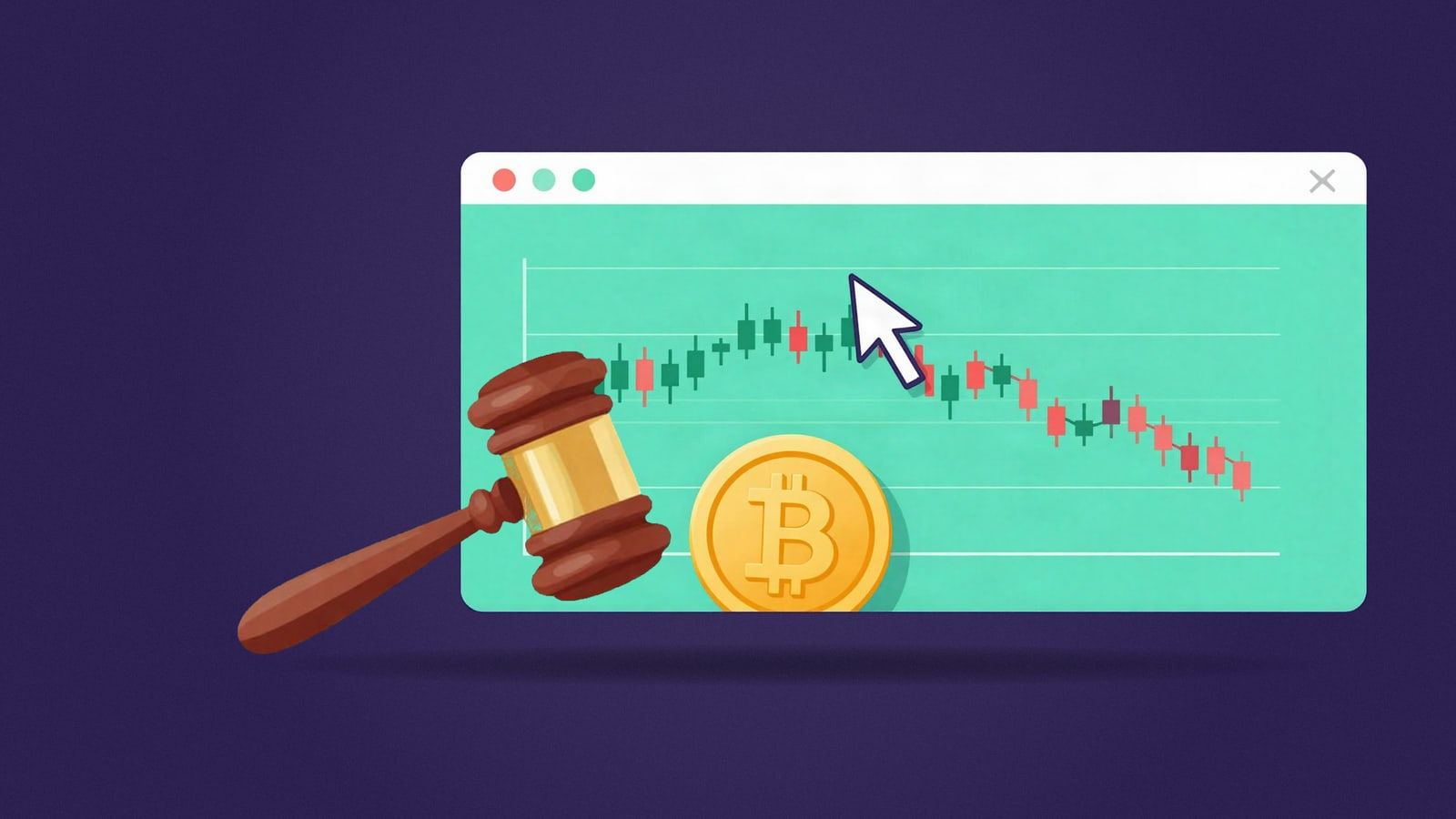
Leveraged and inverse bitcoin ETFs: how 2x and short funds work, and why they can lose when bitcoin doesn't
How 2x and inverse bitcoin ETFs work, why their daily reset can make long-term returns differ widely from bitcoin's, and the costs and risks the SEC highlights.
Figures checked against 4 official and primary sources on . See the sources · How we check
Key points
- Leveraged ETFs aim for a multiple, such as 2x, of a benchmark's daily return. Inverse or 'short' ETFs aim for the opposite of it. The SEC says fund managers have launched both types based on bitcoin futures.
- Most reset daily. Over weeks or months, the SEC says their returns can differ significantly from the stated multiple, especially in volatile markets.
- In the SEC's example, an index falls 10% then rises 10%, ending 1% down. A 2x fund tracking it ends 4% down.
- The SEC calls them specialized products that generally aren't suitable for buy-and-hold investors. They may also cost more and be less tax-efficient than ordinary ETFs.
In this guide
If you think bitcoin will rise, a fund that promises twice its return sounds appealing. If you think it will fall, a fund that rises when it drops sounds like a neat hedge. Both exist. But leveraged and inverse ETFs work in a way that surprises many investors: they’re built to hit their target one day at a time, and over longer periods they can end up far from it.
This guide explains how these funds work, why the daily reset matters so much for something as volatile as bitcoin, and what the SEC tells investors to check. For ordinary bitcoin funds, see bitcoin ETFs explained.
What leveraged and inverse ETFs are
The SEC describes three types:
| Type | What it aims for |
|---|---|
| Leveraged | A multiple of the daily performance of its benchmark. A 2x fund seeks double the daily return |
| Inverse (“short”) | The opposite of the benchmark’s daily performance |
| Leveraged inverse (“ultra short”) | A multiple of the opposite, such as double the opposite of the daily return |
To hit those targets, the funds use swaps, futures contracts and other derivatives. The SEC says inverse ETFs are often marketed as a way to profit from, or hedge against, falling markets.
The crypto versions
The SEC notes that fund managers have introduced leveraged and inverse ETFs that invest in bitcoin futures, seeking amplified exposure to the daily performance of bitcoin futures. It warns that:
- bitcoin is already highly speculative;
- the funds’ strategies are designed to amplify volatile price moves;
- people holding them will experience even greater volatility and risk than people holding bitcoin futures, bitcoin, or both.
Because these funds are built on futures, they also carry futures costs, such as roll premiums when contracts are replaced. See bitcoin futures explained.
The daily reset, step by step
Most leveraged and inverse ETFs reset daily. The SEC gives a hypothetical example with an index and a fund aiming for 2x its daily return, both starting at $1,000:
| Index | 2x leveraged fund | |
|---|---|---|
| Start | $1,000 | $1,000 |
| Day 1: index falls 10% | $900 | $800 (down 20%) |
| Day 2: index rises 10% | $990 | $960 (up 20%) |
| Over two days | Down 1% | Down 4% |
On each day, the fund did exactly what it promised: twice the index’s daily move. Yet over the two days, it lost four times as much as the index, not twice.
The same arithmetic hurts inverse funds. With the same index moves, a fund aiming for the opposite of the daily return would rise 10% to $1,100 on day 1, then fall 10% to $990 on day 2: down 1%, even though the index also ended down.
Why bitcoin’s volatility makes it worse
The SEC says this gap between daily targets and longer-term results can be magnified in volatile markets. The SEC and the CFTC both describe bitcoin and bitcoin futures as highly volatile. As the table above shows, swings up and down can erode a leveraged or inverse fund even when the price ends close to where it started.
The SEC’s own real-life examples show how far apart results can drift:
- Over four months, an index gained 2%, while a fund aiming for 2x its daily return fell 6%, and one aiming for twice the inverse fell 25%.
- Over the same period, a fund aiming for 3x another index’s daily return fell 53%, while that index gained about 8%. A fund aiming for three times the inverse fell 90%.
Costs and taxes
- Higher costs. The SEC says leveraged and inverse ETFs may be more expensive than traditional ETFs.
- Futures costs. Funds built on bitcoin futures face roll premiums as well as management fees. The CFTC warns that these mean returns may never match the spot price.
- Tax efficiency. Daily resets can cause a fund to realize significant short-term capital gains that may not be offset by losses. See crypto tax in the US.
- Missing the target. There’s always a risk that a fund won’t meet its daily objective on a given day.
Who they’re for
The SEC’s view is blunt: these are specialized products that generally aren’t suitable for buy-and-hold investors. There may be trading or hedging strategies that justify holding them longer than a day, but because they reset daily, you could suffer significant losses even if the benchmark gains over time.
Questions to ask before buying
The SEC suggests asking:
- How does this ETF fit my investment objectives and comfort with risk?
- How does it achieve its objective, and what are the risks of the swaps, futures and other derivatives it uses?
- What happens if I hold it longer than one trading day?
- What does it cost, and what are the tax consequences?
Read the prospectus first. You can find it through the fund’s sponsor, your broker, or the SEC’s EDGAR database.
Leveraged ETFs compared with other ways to get leverage
| Leveraged or inverse ETF | Futures | Perpetual contracts | |
|---|---|---|---|
| Resets daily | Yes | No | No |
| Expiry | No (the fund rolls) | Yes | None |
| Main hidden cost | Daily compounding, roll and fund fees | Roll costs if you keep rolling | Funding payments |
For margin and liquidation, see crypto leverage and derivatives rules and perpetual futures in the US.
Frequently asked questions
What is a 2x bitcoin ETF?
Will a 2x fund double bitcoin's yearly return?
What is an inverse bitcoin ETF?
Can I lose money with a leveraged ETF even if bitcoin goes up?
Are leveraged ETFs more expensive?
Sources
- Updated Investor Bulletin: Leveraged and Inverse ETFs (29 August 2023) — Investor.gov, U.S. Securities and Exchange Commission
- Funds Trading in Bitcoin Futures: Investor Bulletin (10 June 2021) — Investor.gov, SEC and CFTC
- Exchange-Traded Products (ETPs) Providing Exposure to Bitcoin and Ether: Investor Bulletin (9 September 2024) — Investor.gov, U.S. Securities and Exchange Commission
- What is a Bitcoin Futures ETF? — Commodity Futures Trading Commission
First published . Spotted an error or an outdated figure? Tell us and we will check it against the source.